
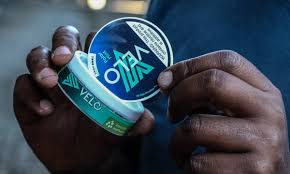
Nicotine Pouches :
Written By Waseem Iftikhar Janjua and Qamar Naseem


For years, public health advocates in Pakistan have warned against the entry of nicotine pouches into the market. We were told we were being alarmist. We were told these products represented “harm reduction,” “innovation,” and a supposedly safer future. We were pressured to regulate them lightly rather than to ban them outright. Despite our logical resistance, the (revenue-hungry) government started taxing these unregulated pouches at a slap-on-the-wrist rate of Rs 1200/- per Kg. Today, the evidence vindicates the precautionary approach.
The WHO’s newly released global report on nicotine pouches confirms what many in Pakistan feared from the beginning: these products are aggressively marketed to youth, designed to sustain nicotine addiction, and rapidly expanding through regulatory loopholes. Pakistan should take this warning seriously. Nicotine pouches are small sachets placed between the lip and gum that release nicotine into the bloodstream. They are often marketed as tobacco-free, stain-free, smell-free, and discreet, but this description is deeply misleading. The nicotine itself is highly addictive, frequently derived from tobacco (since the synthetic nicotine is expensive to produce), and packaged with flavorings, sweeteners, and chemicals designed to make consumption easier and more appealing.
The tobacco industry presents these products as clean, modern, and socially acceptable alternatives to smoking. In reality, they are part of a broader strategy to secure new generations of nicotine users as cigarette consumption declines globally. WHO explicitly warns that transnational tobacco companies are using influencer marketing, social media campaigns, sports sponsorships, candy-like flavors, and sleek packaging to attract adolescents and young adults. This should sound familiar to Pakistan. Our country already faces a major smokeless tobacco burden through products such as gutka, naswar, paan, and other oral nicotine products. Introducing nicotine pouches into this environment would not solve addiction; it would worsen it, diversify it and modernize it. Pakistan’s young population, widespread digital media exposure, weak enforcement systems, and growing online retail ecosystem make it especially vulnerable to these tactics.
The industry’s strategy is also becoming clearer globally. Major tobacco corporations operating in Pakistan are heavily investing in nicotine pouches because they see them as the next profitable frontier. WHO notes that global retail sales exceeded 23 billion units in 2024 and the market was valued at nearly US$7 billion in 2025. Growth is expected to accelerate in regions including Asia-Pacific, with Pakistan identified as a major and emerging market. This is not accidental expansion. It is calculated market penetration.
Nicotine pouches are engineered for addiction. Some pouches contain extremely high nicotine concentrations and are sold in escalating “strength tiers” labelled for “beginners,” “advanced,” or “experts.” WHO reports that certain products contain nicotine levels as high as 150 mg. The health concerns are equally troubling. Nicotine exposure during adolescence affects brain development, attention, learning, and long-term dependence. WHO also warns about cardiovascular risks and the growing danger of accidental poisonings among children because many products resemble sweets or candy.
The experience of other countries should serve as a warning tale for Pakistan. In the United States, nicotine pouch use among youth and young adults nearly quadrupled between 2022 and 2025, according to the WHO report. Among American school students, nicotine pouches rapidly rose to become one of the most commonly used nicotine products. In the United Kingdom, surveys now show growing use among teenagers, prompting demands for tighter restrictions. Once these products become normalized, reversing the trend becomes far more difficult.
Pakistan therefore faces a critical policy choice. Should it wait for widespread addiction among young people before acting, or act decisively while the market is still relatively limited? The answer should be obvious. Some argue that regulation is enough. But Pakistan’s regulatory capacity in tobacco control is already stretched thin. There are no technical, scientific and laboratory expertise to match or even challenge the products produced by the global tobacco engineers. Enforcement against illegal cigarette sales, tax evasion, and smokeless tobacco marketing remain vital challenges. Expecting the state to effectively monitor nicotine strengths, synthetic nicotine formulations, online sales, influencer marketing, cross-border advertising, and youth-targeted promotions is unrealistic.
Even WHO now acknowledges that countries may legitimately pursue outright bans in line with national tobacco control goals. The organization states clearly that regulatory pathways “could include a ban” and that governments choosing prohibition should ensure strong enforcement and surveillance mechanisms. That is precisely why Pakistan’s earlier resistance deserves recognition rather than criticism.
The precautionary principle matters in public health. Youth and children should not become testing grounds for emerging nicotine products simply because multinational companies are searching for new consumers. Pakistan has already paid a heavy price for delayed action on cigarettes and smokeless tobacco. Repeating that mistake with nicotine pouches would be irresponsible. There is also a broader ethical issue. The same corporations that sold deadly cigarettes for decades are now rebranding themselves as champions of “smoke-free futures” while continuing to expand nicotine dependency through new products. WHO’s findings expose how these companies replicate old cigarette marketing tactics, glamour, lifestyle branding, social acceptance, and youth appeal, under a modern digital layer.
Pakistan must not fall for this rebranding exercise. Instead, policymakers should move toward a comprehensive prohibition and outright ban on nicotine pouches and related emerging oral nicotine products, alongside stronger enforcement against digital advertising, online sales, and cross-border promotion. Public awareness campaigns should also educate parents, teachers, and youth about the risks of nicotine addiction disguised as “safe” or “tobacco-free” products. The lesson from the WHO report is simple: once these products gain a foothold, the industry moves faster than regulation. Pakistan was right to be cautious. It would be even wiser now to act decisively to ban these products before a new generation is hooked on nicotine under the illusion of modernity and safety.
Authors are tobacco control and health advocates working at the Sustainable Development Policy Institute (SDPI), Islamabad, and Blue Veins, Peshawar.