














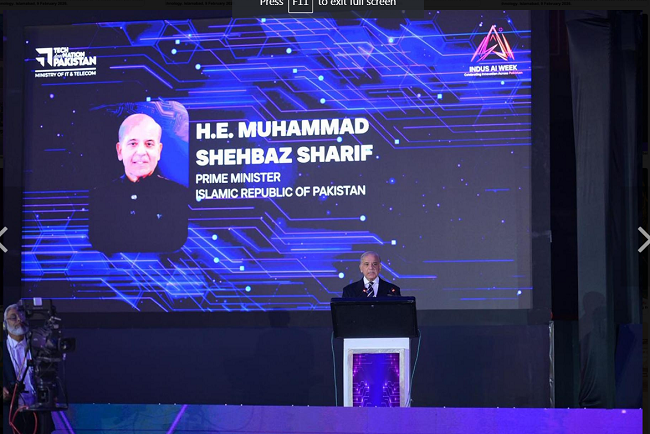
ISLAMABAD, Feb 9 (APP):Prime Minister Shehbaz Sharif on Monday announced that the government would invest $1 billion in the country’s Artificial Intelligence (AI) sector by 2030 to build a future-ready digital economy and empower the country’s youth.
The prime minister said the investment would help establish a robust AI ecosystem across Pakistan. He announced that AI curriculum will be introduced in all federally run schools, while 1,000 fully funded PhD scholarships in AI will be offered to students from across the country by 2030. In addition, a nationwide programme to train one million non-IT professionals in AI skills will be launched to boost productivity and improve livelihoods.
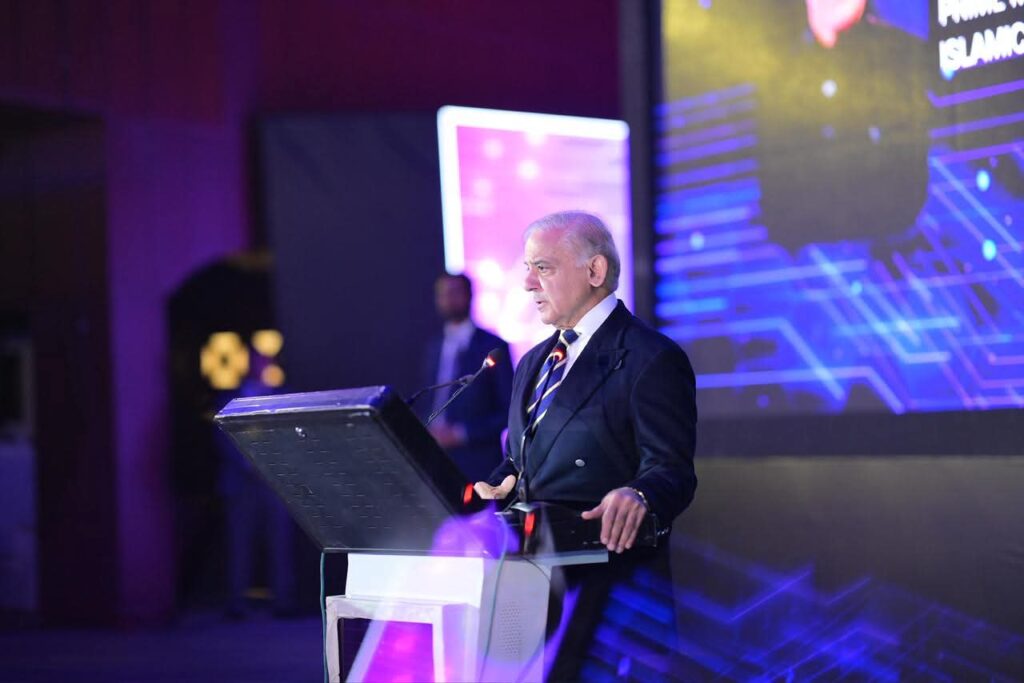
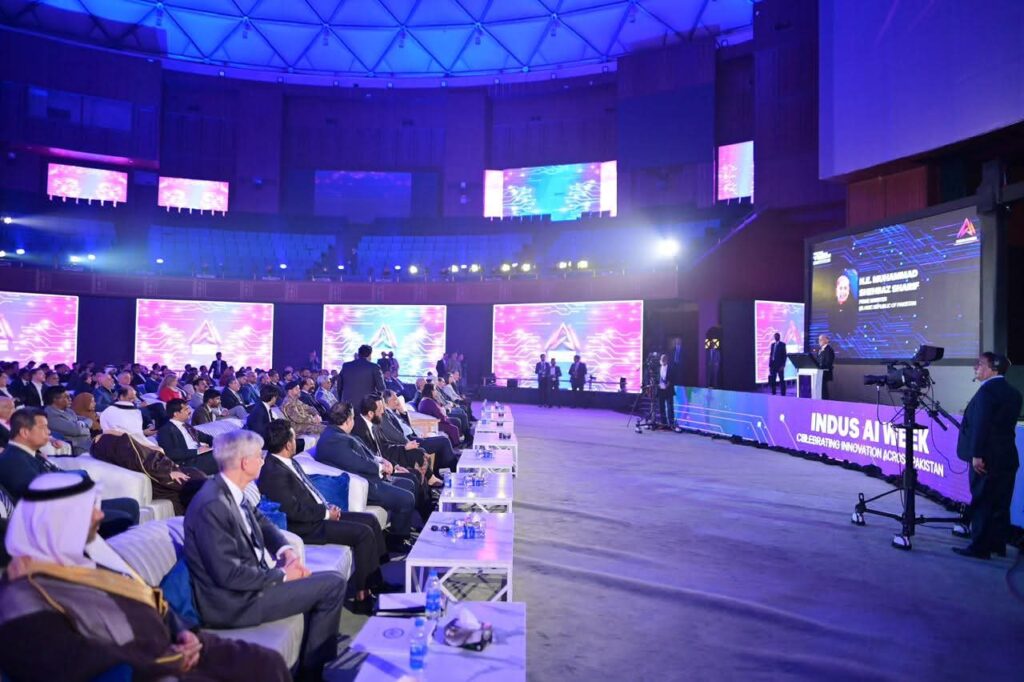
“Pakistan is absolutely ready to accept the challenge and work with our global partners, with great commitment and dedication”. he said while addressing the inaugural session of Indus AI Week.Highlighting priority sectors, the prime minister said AI interventions would focus on agriculture, mines and minerals, industry, commerce, trade, and youth empowerment.With a population of around 240 million, nearly 60 per cent comprising young people, he stressed the need to equip them with modern knowledge and techniques.3
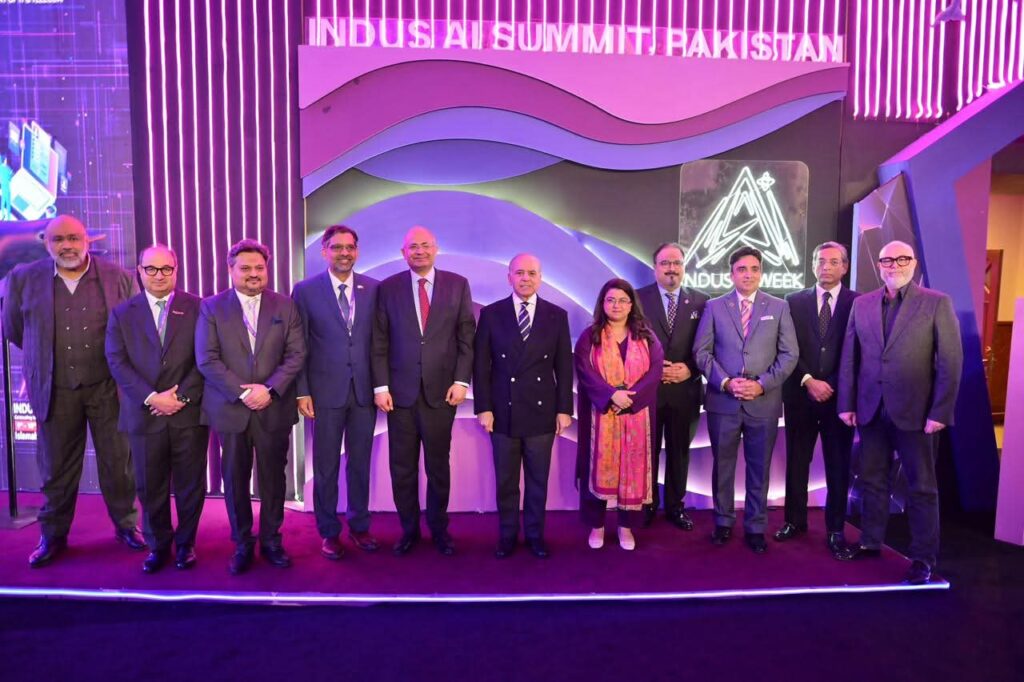
Addressing concerns among IT professionals about rapid technological change, he assured that government programmes would help transform IT technicians into AI experts, unlocking unprecedented gains in agricultural yield, quality and efficiency, as well as industrial growth and women’s empowerment.
The prime minister pointed to ongoing digital reforms as evidence of Pakistan’s readiness, citing the digitisation of the Federal Board of Revenue, improved revenue recovery through data-driven systems, and the use of modern scanners and digital instruments at ports to curb smuggling. “We are recovering lost revenues through technology and offering quality training to our young men and women in agriculture, commerce and trade,” he said.
Recalling past initiatives under the leadership of Muhammad Nawaz Sharif, the prime minister said Pakistan’s current push towards AI builds on earlier reforms. He highlighted the laptop distribution programme for high achievers in Punjab, establishment of e-libraries in remote areas, e-stamp papers, and the digitisation of land records in partnership with the World Bank, which helped curb corruption.
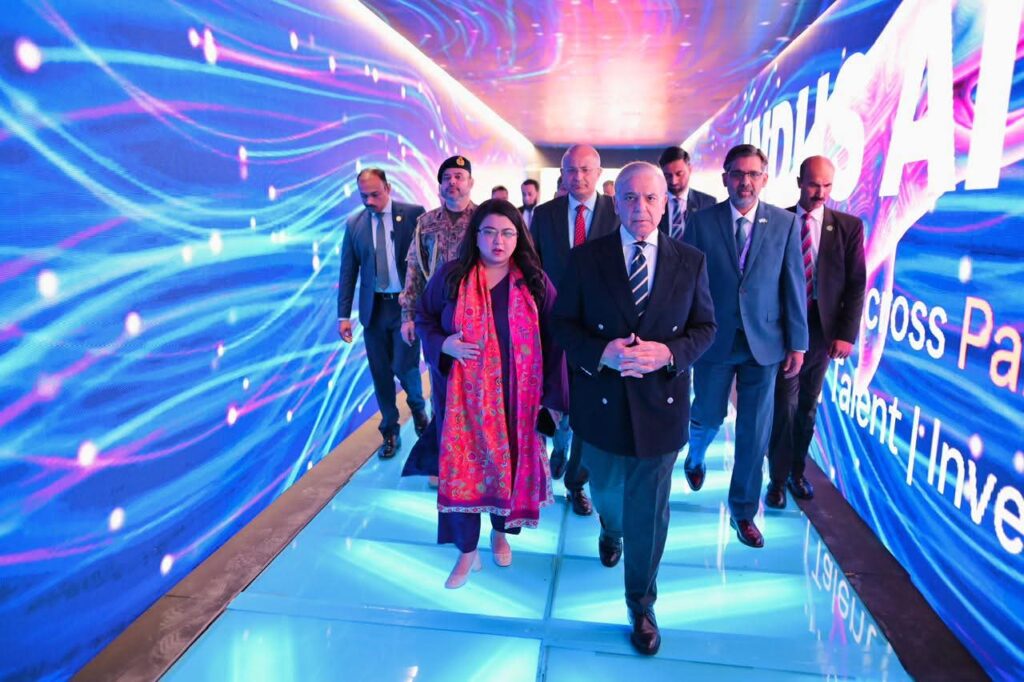
He also noted that Pakistan’s first Safe City project and first IT university were established in Lahore. “We have learned from the past, and today Pakistan is ready to join the world in AI interventions,” he said.Minister for IT Shaza Fatima Khawaja said Indus AI Week aimed to strengthen coordination between universities, governments and international companies, underscoring Pakistan’s full commitment to a digital revolution. She said the Pakistan Digital Authority was preparing a nationwide digital master plan to guide future transformation.Minister for Planning Ahsan Iqbal, in his remarks, said the world had entered a moment where intelligence itself had become a factor of production, with nations competing on ideas, talent, data and technology rather than commodities.
He described artificial intelligence as a bigger disruptor than electricity or the internet, noting that Pakistan’s engagement with technology began over two decades ago with early IT policies, the creation of NADRA, and large-scale investment in advanced human capital.
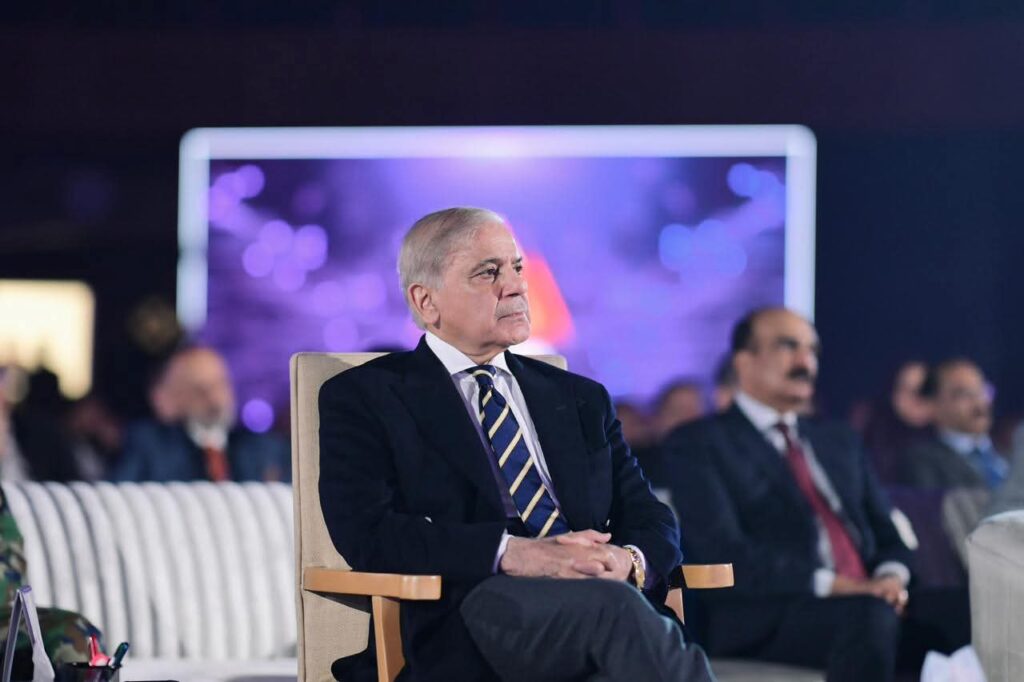
PhD scholarships in AI by 2030
Shaza presents Islamabad AI declaration, outlining Pakistan’s global stance on AI. (PhD scholarships in AI by 2030 ).
ISLAMABAD, Feb 09 (APP):Federal Minister for Information Technology and Telecommunication Shaza Fatima Khawaja on Monday said Pakistan has formally articulated its vision on artificial intelligence through the adoption of the Islamabad Artificial Intelligence Declaration, aimed at promoting a sovereign, inclusive and outcome-driven AI ecosystem.
Addressing Indus AI Week 2026, the minister said the declaration was finalised after detailed deliberations, including a high-level roundtable held the night before with more than 40 global technology leaders from across the world.
The event brought together national and international AI experts, industry leaders and government representatives to engage in high-level discussions and envision the future of artificial intelligence in Pakistan.
She thanked international participants for travelling to Pakistan and acknowledged the efforts of the Pakistan Digital Authority, the Ministry of IT team, Pakistan Software Export Board, Universal Service Fund, and other institutions involved in organising the initiative.
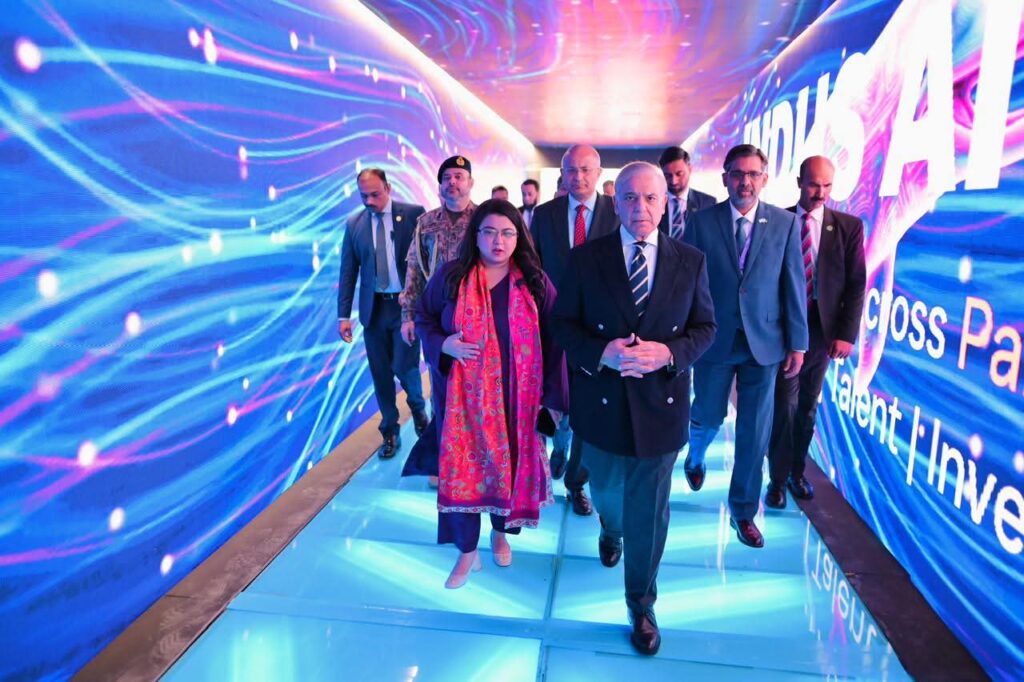
Shaza Fatima said the declaration underscores a private sector-led and government-enabled approach to artificial intelligence, with a focus on strengthening Pakistan’s digital society, digital economy and digital governance.
She emphasised that the framework is anchored in public value and public trust, supported by strong institutions, responsible safeguards and disciplined execution, while ensuring space for innovation and entrepreneurship.The minister outlined eight core pillars of the Islamabad AI Declaration: sovereign purpose and measurable public value; human accountability under constitutional authority; use case-first pragmatic delivery; sovereign data privacy and trust; explainable, auditable and safe AI; a whole-of-government approach to AI governance; inclusive and responsible innovation; and private sector-led, sovereign and open AI ecosystems.
She said the declaration was developed under the direction of Prime Minister Muhammad Shehbaz Sharif and reflects some of his earliest directives to define Pakistan’s position on artificial intelligence at the global level.
Approved by the prime minister and shaped through consultations with local and international stakeholders, the declaration represents Pakistan’s formal commitment to responsible AI development.Shaza Fatima reaffirmed that Pakistan aims to lead by example in adopting artificial intelligence that is ethical, transparent and aligned with national priorities.Former Chief Information Officer of Estonia, Siim Sikkut, who also addressed the event, said nationwide digitalisation was essential to deliver services efficiently, remain competitive and strengthen governance.
He said embracing artificial intelligence as a core element of digital transformation had become a necessity rather than a choice.He lauded Pakistan’s progress under the Pakistan Digital Nation Act and the establishment of the Pakistan Digital Authority, describing them as strong foundations for building a digital nation.Emphasising partnerships, he said collaboration between the public and private sectors, along with international cooperation, would be key to realising Pakistan’s AI ambitions.He added that global experts and partners present at the event were ready to support Pakistan in translating its digital and AI vision into reality, wishing the country success in its journey towards becoming a digital nation.
Table of Contents
Read More :https://timelinenews.com.pk/cbd-punjab-successfully-concludes-ballot/
In Urdu :dailytimeline.pk
PhD scholarships in AI by 2030