Pakistan Approves Five-Year Auto Policy with Major Tax Relief for New Energy Vehicles
Auto Policy : Major Tax Relief for New Energy Vehicles
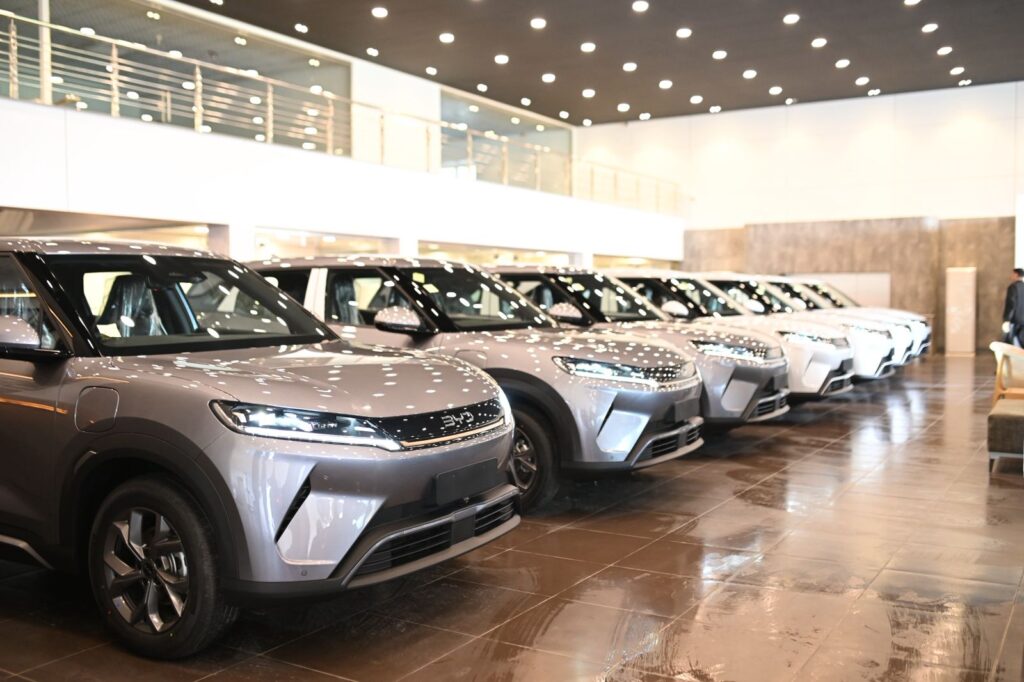
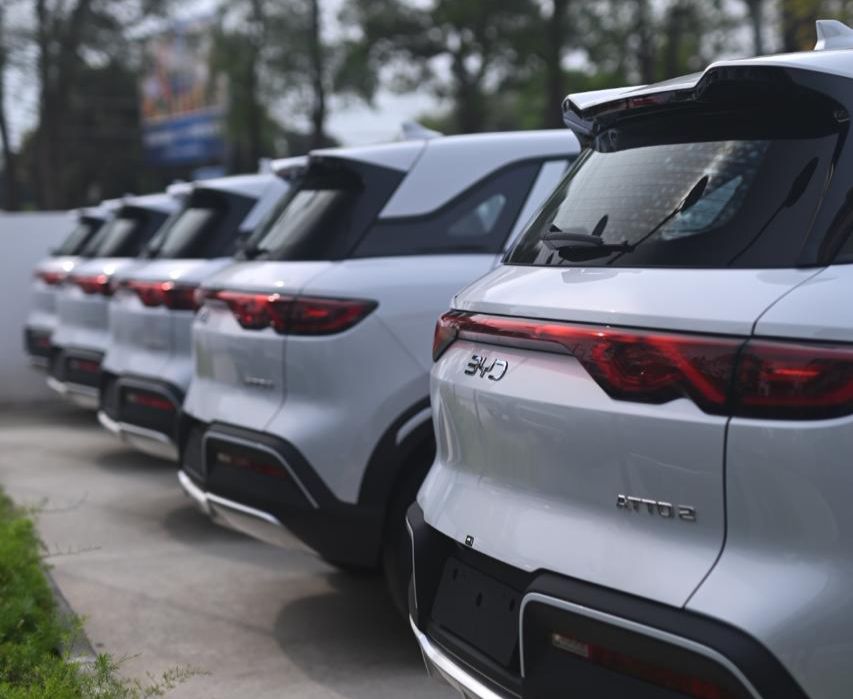
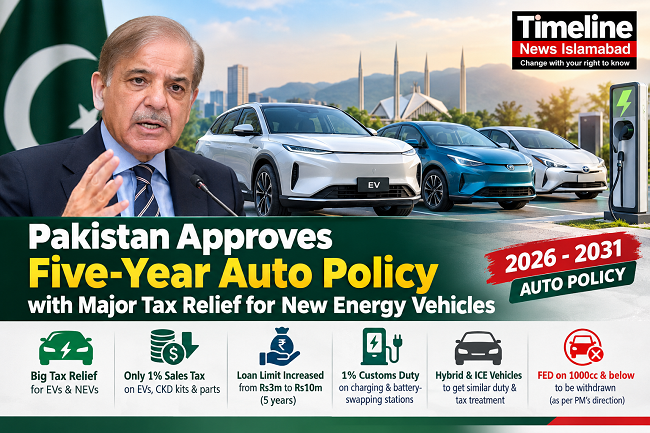
ISLAMABAD: Prime Minister Shehbaz Sharif has approved the draft of Pakistan’s new five-year automobile policy for 2026-2031, introducing significant tax incentives for new energy vehicles (NEVs) while extending protection for conventional vehicle manufacturers.
Under the approved framework, battery electric vehicles (BEVs) will receive the highest level of tax preference. Range-extended electric vehicles and plug-in hybrid electric vehicles will be treated as separate categories rather than receiving identical tax benefits.
The policy proposes a major reduction in the tax burden on new energy vehicles, their completely knocked-down (CKD) kits, components, inputs and raw materials. These items will be subject to a sales tax of only one percent, while exemptions from Federal Excise Duty (FED), Capital Value Tax and withholding tax will also be provided.
The government has also decided to make NEVs more accessible through financing. The maximum loan limit for purchasing an NEV has been increased from Rs3 million to Rs10 million, while the repayment period has been extended from three years to five years.
To support electric mobility infrastructure, imports of charging and battery-swapping stations will attract only one percent customs duty. The government will also provide viability-gap funding for battery-swapping stations to encourage the development of supporting infrastructure.
Meanwhile, hybrid electric vehicles and conventional internal combustion engine (ICE) vehicles will receive similar treatment in terms of duties and taxes under the new policy.
The government has also approved a proposal to impose additional FED on conventional vehicles to partially offset price differences resulting from tariff reductions.
However, Prime Minister Shehbaz Sharif directed that the proposed FED on conventional vehicles with engine capacities below 1,000cc should be withdrawn.
The new auto policy is expected to reshape Pakistan’s automobile market by encouraging electric mobility, improving access to financing and supporting investment in charging and battery-swapping infrastructure, while maintaining a transition period for the conventional automobile industry.
Highlighted
- Major Tax Relief for New Energy Vehicles
- EV Financing Limit Increased to Rs10 Million
- Incentives for Charging and Battery-Swapping Stations
- New Taxes Proposed for Conventional Vehicles
- 2026-2031 Auto Policy
Table of Contents