PAKISTAN AIR FORCE: REDEFINING THE BATTLE SPACE
PAKISTAN AIR FORCE: REDEFINING THE BATTLE SPACE
Written by: Izmi Herlani
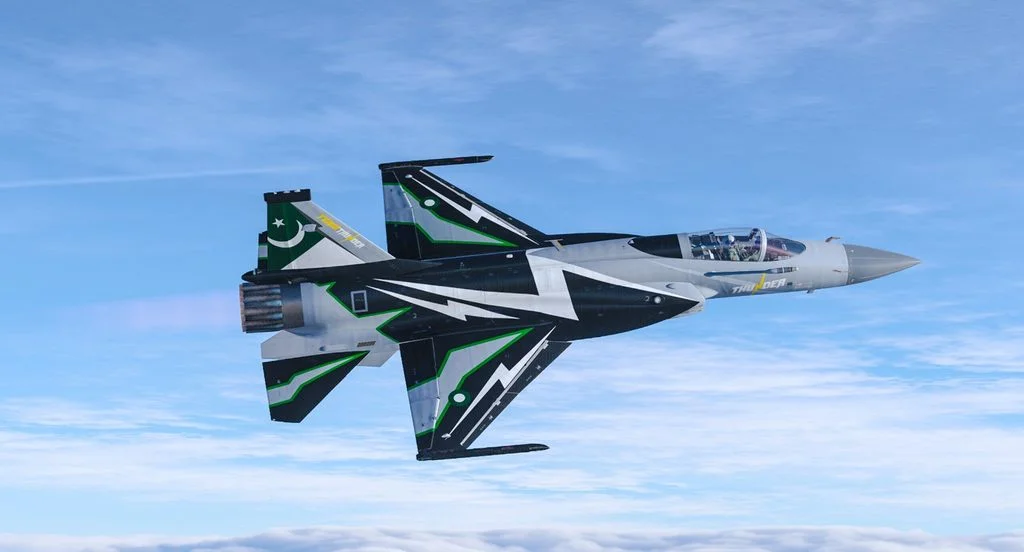
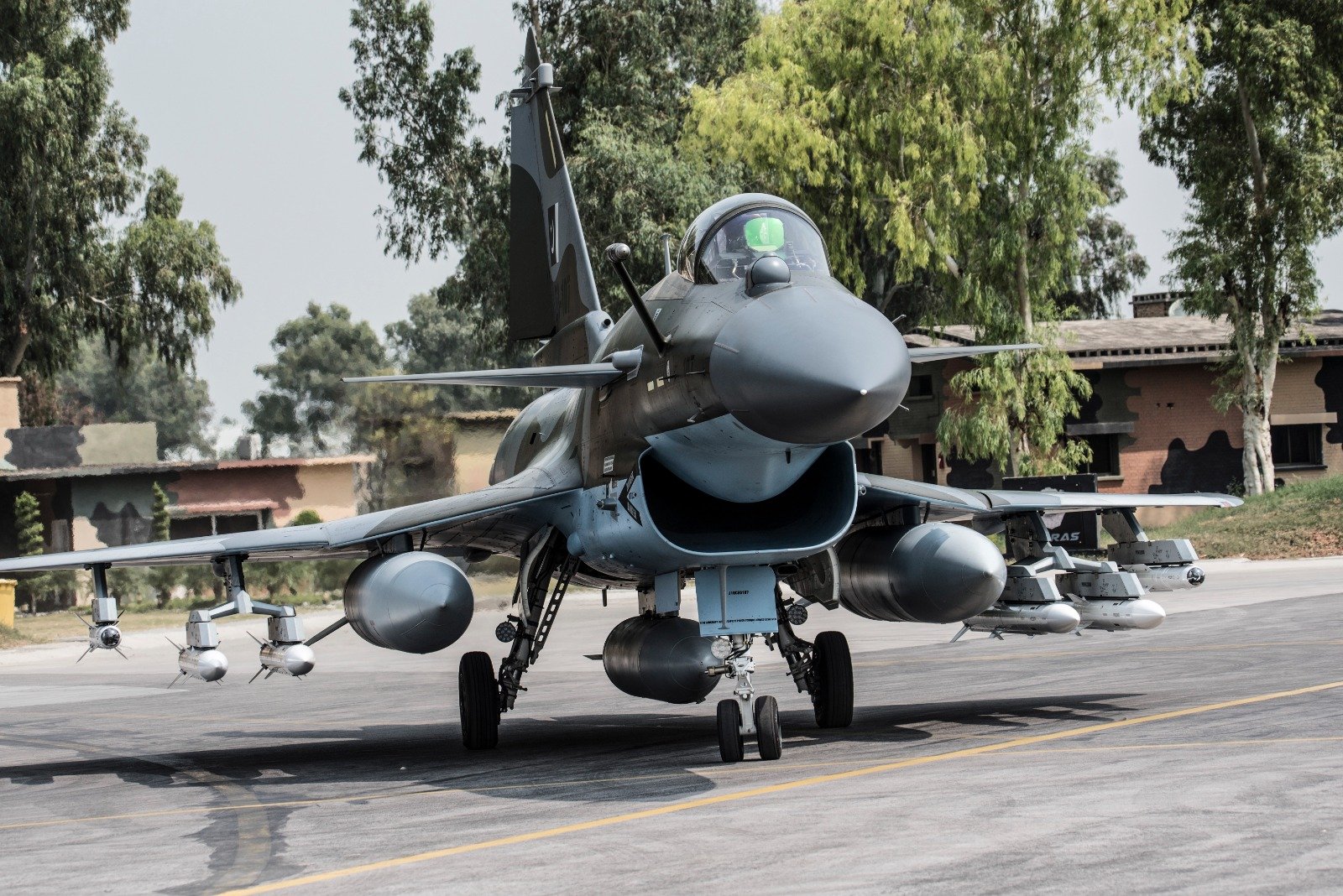
There are moments in a nation’s life when history does not whisper. It roars. It roars through the thunder of afterburners. Through the glow of radar screens in darkened operations rooms. Through the clenched resolve of a fighter pilot strapping into a cockpit before dawn. Through the silent hands of technicians, controllers, engineers and commanders who know that, when the alarm sounds, there will be no second chance. That roar of airpower is Pakistan Air Force.
Born in 1947 amid uncertainty, scarcity and peril, PAF inherited little but a boundless duty: defend a new homeland whose borders were still raw, whose skies were vulnerable and whose future was yet unwritten. It did not begin with abundance. It began with adversity. But adversity has a strange habit, it either breaks a Force or forges it. PAF was forged. From its earliest days, it learned a lesson that would become its creed: steel without spirit is scrap; numbers without nerve are merely arithmetic. A nation may count aircraft, missiles, radars and runways but when the sky darkens with danger, only character counts.
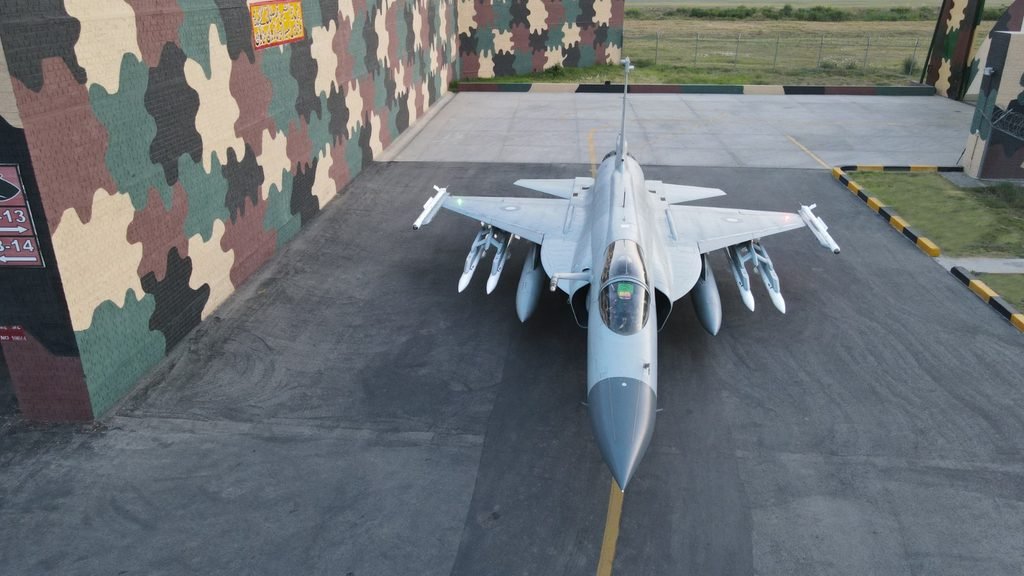
In 1965, it wrote courage into the clouds. In 1971, it absorbed pain without allowing pain to become paralysis. In the decades that followed, it rebuilt, recalibrated and returned stronger not because the road was easy, but because retreat was never an option. Every challenge became a lesson. Every loss became a vow. Every threat became a reason to become sharper, faster, harder to surprise and impossible to intimidate.
This is not simply any Air Force’s history.
It is the anatomy of resolve. Pakistan Air Force did not remain trapped in the romance of old dogfights and legendary sorties. It understood that tomorrow’s war would not announce itself with the roar of engines alone. It would arrive through invisible signals, disrupted networks, manipulated data, silent drones, electronic shadows and decisions made in fractions of a second. The battlefield had changed and so did PAF.
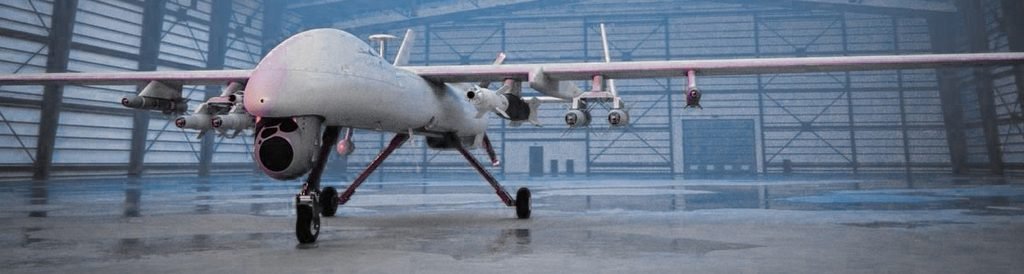
Under the visionary leadership of Air Chief Marshal Zaheer Ahmed Baber Sidhu, PAF has entered an era where airpower is no longer confined to altitude, speed and firepower. It is now a connected, intelligent, Multi-Domain Force built to see farther, decide faster, strike smarter and deny the enemy the luxury of certainty. This is not modernisation for display. This is the transformation for survival.
The war of the future will not be won by the aircraft that flies highest. It will be won by the Force that knows first, the Force that sees what others cannot see; the Force that can turn a fleeting signal into a decisive strike before the enemy even understands he has been found. That is the logic of the integrated Kill Chain. A radar detects. A sensor confirms. Intelligence fuses. A Command Centre decides. Electronic warfare blinds. Cyber operations disrupt. A data link guides. A fighter engages. A weapon strikes. The missile may be launched by one pilot. But the blow is delivered by an entire nation’s technological will.
This is the new PAF: not a scattered collection of machines, but a single living combat organism. Fighters, Airborne Early-Warning platforms, radars, drones, Cyber teams, Electronic Warfare units, Satellite-enabled systems, Command Centres and precision weapons, all moving in one rhythm, breathing through one network, striking with one purpose. The enemy may see the aircraft. But he will not see the system that has already surrounded him.
That is where Multi-Domain Warfare becomes more than a doctrine. It becomes a weapon. Air, Space, Cyber, Electromagnetic Spectrum, Unmanned systems, Artificial Intelligence, Long-range precision strik, Information warfare, each domain alone is powerful but together, they are overwhelming.
The establishment of National Aerospace Science and Technology Parks gave this vision a powerful engine. It represents the conviction that Pakistan’s future security cannot rest solely on imported platforms or borrowed technologies. It must be built through indigenous innovation, sovereign capability and the confidence to create what tomorrow’s battlefield will demand.
Because dependence is a vulnerability, Innovation is deterrence and self-reliance is strategic freedom.
Then came May 2025. For 96 hours, South Asia stood on the edge of a dangerous precipice. The skies were tense. The airwaves were charged. Every signal carried consequence. Every movement demanded calculation. Every decision had the potential to widen the conflict. But this was not merely a contest of jets and missiles.It was a collision of systems. It was a test of readiness. It was a trial by technology, tempo and temperament. What unfolded demonstrated a truth too often ignored by those who worship numbers: the side with more platforms does not automatically own the battle. The side with better integration, sharper intelligence, faster decisions and stronger nerves can seize the initiative and once initiative is seized, the entire geometry of war begins to shift. Operation Zarb-e- Karrar was the moment when preparation met pressure.
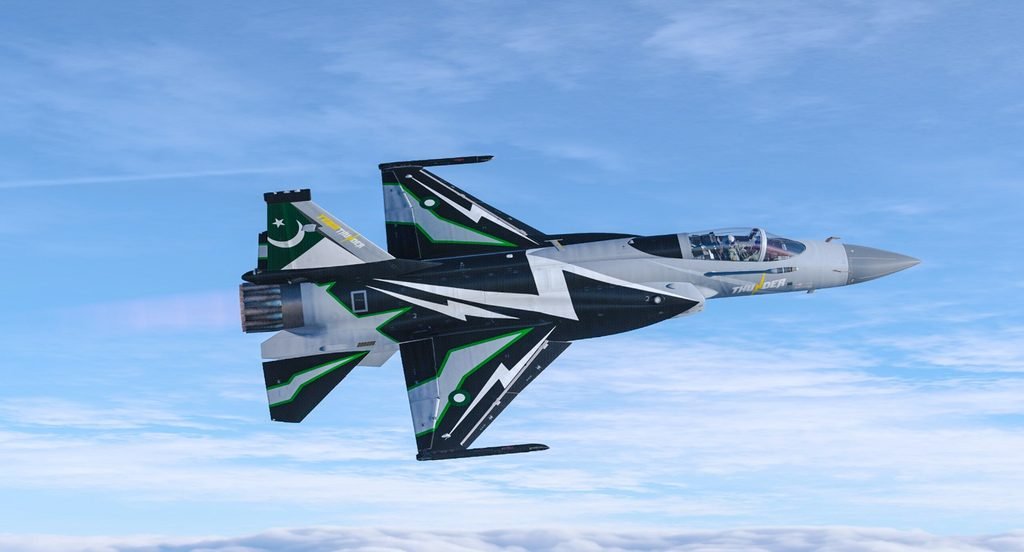
It was the moment when invisible domains became visible in their effects. It was the moment when Electronic Warfare, Space and Cyber capabilities, unmanned systems, precision weapons and Network Centric Command converged into a single operational reality. And at the centre of that reality stood resolve. Not reckless resolve. Not theatrical resolve. But the cold, disciplined resolve of a Force that had prepared in silence while others mistook silence for weakness. This is where strategic paralysis enters the equation.
Strategic paralysis is not the destruction of everything. It is more sophisticated than that. More devastating than that.
It is the ability to make an opponent hesitate at the very moment he must act.
It is to confuse his sensors, fracture his communications, cloud his intelligence, disrupt his command and compress his choices until every option carries unacceptable risk. It is to create such uncertainty that a Force with weapons, aircraft and manpower finds itself unable to convert those assets into coherent action. A military can possess immense firepower. But if it cannot see clearly, communicate securely, decide quickly, or coordinate effectively, then its strength becomes weight without movement. That is paralysis. And in the age of Multi-adomain warfare, paralysis can begin before the first visible strike. It begins in the network. In the spectrum. In the command chain. In the mind of the decision-maker who suddenly realises that the battle is moving faster than his ability to control it. That is the power PAF is building.
From the uncertain dawn of 1947 to the unforgiving battlespace of the present, Pakistan Air Force has never treated security as a matter of chance. It has built strength through discipline, sharpened capability through hardship and turned every emerging challenge into a new reason to innovate. Its platforms will evolve. Its technologies will advance. The frontiers of conflict will extend from the clouds into code, spectrum, space and beyond. But the core remains constant: a Force trained to remain calm when the horizon burns; a force prepared to act when hesitation carries a price; a Force whose greatest weapon is not merely what it flies, but the purpose with which it fights.
PAF’s resolve is not a memory of past glory. It is a living Force, silent in preparation, decisive in purpose and relentless in the defence of Pakistan.