
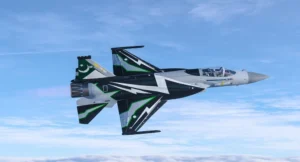
Beyond the Cockpit: Airpower Leadership in an Integrated Battlespace
Written by: Maryam Abrar
Every Air Force Day, the nation remembers the Shaheens who rose into the skies when Pakistan faced danger. We remember their courage, sacrifice and indomitable spirit. Yet, the story of airpower is no longer written only in the cockpit. Behind every successful sortie, every timely interception and every decisive engagement lies something far greater: visionary leadership, technological superiority, rigorous training and an integrated operational architecture. The evolution of modern warfare has transformed the very meaning of airpower leadership. Victory is no longer determined solely by individual flying skill or classic dogfights. It is shaped by the ability to connect aircraft, sensors, weapons, artificial intelligence, data links, electronic warfare, air defence and command-and-control systems into one seamless battlespace.
From the cockpit to the command room, from the sensor to the shooter, modern air warfare is a contest of information, integration and decision superiority. Pakistan Air Force has travelled a remarkable distance in this transformation. The 1965 war remains a defining chapter in our military history. In an era dominated by visual-range engagements, PAF pilots confronted a numerically superior adversary with exceptional courage, flying skill and split-second judgment. The pilot was, in many ways, both the sensor and the decision-maker. What he could see, assess and act upon in those decisive moments often determined the outcome. But the battlespace of today is vastly different. Threats can be detected hundreds of kilometres away. Aircraft can engage without ever seeing each other. Sensors can be distributed across multiple platforms, information can be transmitted instantaneously and artificial intelligence can assist commanders in making sense of an increasingly complex battlespace. This is where the transformation of Pakistan Air Force under the visionary leadership of Air Chief Marshal Zaheer Ahmed Baber Sidhu, Chief of the Air Staff PAF, assumes extraordinary significance. His approach to modernization has gone beyond the conventional concept of simply acquiring new aircraft. The objective has been to develop a complete combat ecosystem—one in which platforms, weapons, sensors, networks, electronic warfare capabilities, air defence and command-and-control systems operate as an integrated whole.
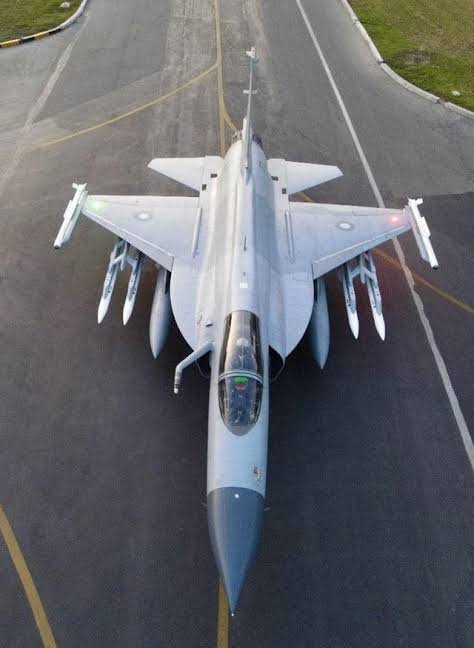
The induction and advancement of platforms such as the J-10C, JF-17 Block III and upgraded Erieye AEW&C systems represent important milestones in this journey. But their true strength lies not merely in their individual capabilities. Their real potential emerges when they become interconnected nodes of a secure, network-centric battlespace capable of generating a common and continuously updated operational picture. Modernization, therefore, is not simply about putting a more advanced aircraft in a hardened shelter. It is about creating the ability to see first, understand first, decide first and act first. This transformation has also demanded a corresponding transformation in training and leadership. Today’s PAF pilot must be more than an accomplished aviator. He must understand sensors, networks, electronic warfare, data fusion, artificial intelligence and multi-domain operations. He must be capable of making rapid decisions in an environment where seconds can determine strategic outcomes.
The true test of such an architecture, however, comes not during peacetime exercises, but when the nation is confronted by war. That test came during Marka-e-Haq in May 2025, when Pakistan faced unprovoked aggression from the enemy. At a moment of national peril, Pakistan Air Force emerged not merely as a force defending the skies, but as a Shield of Metal; standing between Pakistan and the aggression directed against its sovereignty. The response demonstrated the culmination of years of modernization, preparedness and doctrinal evolution. Advanced fighters, airborne early-warning capabilities, long-range weapons, secure communications, electronic warfare and integrated command-and-control came together to create a synchronized combat response. PAF’s employment of J-10C and JF-17 platforms, supported by networked sensors and long-range engagement capabilities, demonstrated the changing character of air warfare. The battle was not simply fought between individual aircraft; it was fought across an interconnected battlespace where sensors, shooters, networks and commanders functioned as one force. The significance of Marka-e-Haq therefore extended well beyond the numbers or individual engagements. It demonstrated the operational value of multi-domain integration, where capabilities across the air, land, space, cyber and electromagnetic domains can converge to generate decision superiority. It was a moment when years of preparation became visible.
The lesson is profound. The Shaheen in the cockpit remains at the heart of PAF’s combat power, but today’s Shaheen is empowered by an entire ecosystem surrounding him. His eyes are extended by sensors. His reach is amplified by precision weapons. His awareness is enhanced by data links. His decisions are supported by an integrated command network. His effectiveness is multiplied by technology, training and teamwork. This is the bridge between the legacy of 1965 and the battlespace of 2025 and beyond. The heroes of 1965 demonstrated what courage could achieve against overwhelming odds. The defenders of Marka-e-Haq demonstrated what that same courage, when combined with technology, preparation and visionary leadership, can achieve in the modern battlespace. On this Air Force Day, therefore, the nation salutes not only those who flew into harm’s way but also those who had the foresight to prepare the Force for wars that had yet to be fought.
From the legendary cockpits of 1965 to the network-centric battlespace of today, Pakistan Air Force continues to evolve—forged by courage, powered by technology, strengthened by training and guided by visionary leadership. And when the skies over Pakistan are threatened, that evolution assumes its ultimate purpose. The Shaheens rise. The networks awaken. The weapons systems respond. And the Shield of Metal stands firm. Because the legacy is not merely to defend Pakistan. It is to remain ready to defend it against every threat, in every domain, at every altitude and at every moment. Pakistan first, Pakistan always.
Table of Contents
