
Empty Wallets: Petrol Prices Rise Family Peace
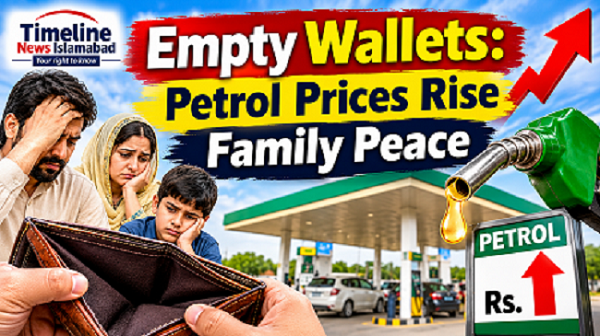
Empty Wallets: Petrol Prices Rise Family Peace

Dr. Muhammad Shahzad Ashfaq
Post-Doctorate (Peace Education)
International Islamic University Islamabad
The escalating cost of petrol represents one of the most pressing economic challenges facing modern families in the contemporary world. When fuel prices surge, the ripple effects extend far beyond the gas pump, penetrating the very fabric of household stability and family relationships. This essay examines the multifaceted consequences of rising petrol prices on family dynamics, economic security, and overall household peace. As fuel costs continue to fluctuate and generally trend upward due to geopolitical tensions, supply chain disruptions and global energy market complexities, families find themselves caught in an increasingly difficult financial squeeze. The elevated petrol prices create significant financial stress within households, which directly contributes to interpersonal conflict, psychological strain, and the deterioration of family cohesion and peace.
Rising petrol prices fundamentally alter household budgets in ways that cascade through every aspect of family life. Transportation costs represent a substantial portion of household expenditures for most families, typically accounting for between 15 to 20 percent of total spending. When petrol prices increase, families must make difficult decisions about resource allocation. Parents often find themselves choosing between purchasing fuels for work commutes and addressing other essential needs such as groceries, medications, or utilities. This financial strain creates an immediate sense of vulnerability and anxiety within the household, as individuals recognize their reduced capacity to manage unexpected emergencies or maintain their current lifestyle.
The burden of rising fuel costs is particularly acute for families living in suburban or rural areas, where reliable public transportation is limited or nonexistent. These families have no viable alternatives to personal vehicle use, making them especially vulnerable to petrol price fluctuations. The necessity of commuting to work, combined with children’s school transportation needs, shopping requirements, and medical appointments, means that these families must absorb fuel price increases without the option of reducing consumption. Consequently, the financial pressure accumulates, creating a sustained background stress that affects all family members.
The psychological impact of financial hardship extends beyond mere monetary concern; it fundamentally affects mental health and emotional well-being. Research in economic psychology demonstrates that financial stress is among the leading causes of anxiety and depression within families. When parents face the constant worry of affording fuel to maintain employment, the stress manifests in increased irritability, reduced patience, and heightened emotional reactivity. These psychological changes create an environment where minor disagreements escalate into significant conflicts, and where the normal stresses of family life become magnified through the lens of financial anxiety.
Additionally, the uncertainty inherent in volatile fuel prices creates a persistent state of tension. Families cannot reliably predict their monthly transportation costs, making budget planning difficult and creating a sense of loss of control. This unpredictability generates a chronic stress response that affects sleep patterns, immune function, and overall health outcomes. Parents working multiple jobs to compensate for reduced disposable income experience exhaustion and burnout, leaving them emotionally unavailable for their children and spouses, thereby compromising the quality of family relationships.
Extensive research has established a strong correlation between financial difficulties and marital conflict. Rising petrol prices contribute to disagreements between spouses regarding financial management, priorities, and sacrifices. One partner may blame the other for insufficient income generation, inefficient budget management, or frivolous spending on non- essentials. These accusations often mask deeper anxieties about financial security and competence, but they nonetheless damage trust and respect within relationships. The pressure of financial constraints forces couples into difficult conversations about lifestyle changes, and these conversations frequently trigger defensiveness and emotional hurt.
For single-parent households, the stress is particularly intense. Single parents manage the entire financial burden without a partner to share both the economic responsibility and emotional support. Rising fuel costs force these parents to make impossible choices between work participation and family time. Many single parents work multiple jobs to maintain housing and provide for their children, and increased fuel costs directly reduce the time and energy available for parenting and self-care. The resulting exhaustion and stress create an environment where children receive less attention and emotional support, potentially affecting their own well-being and academic performance.
Children are not insulated from the financial stress that elevated fuel costs generate. When parents are preoccupied with financial worry, they are less emotionally present and responsive to children’s needs. Research in developmental psychology indicates that parental stress and reduced emotional availability negatively affect children’s emotional security, academic performance, and social relationships (Smith et al., 2023). Children sense the tension and anxiety in the household, and many internalize these emotions, developing their own anxiety about money and stability.