Unsafe Schools Threaten Girls’ Education in Khyber Pakhtunkhwa
KP’s Unsafe Schools Put Girls’ Education at Risk
Unsafe Schools, Uncertain Futures: Why Khyber Pakhtunkhwa Must Prioritise Infrastructure for Girls’ Education
Written by Farhan Khalil
The deadly collapse of a private school building in Peshawar has exposed serious gaps in educational infrastructure and raised urgent questions about the safety of students across Khyber Pakhtunkhwa. The October 15, 2026, tragedy, which claimed the lives of at least 34 students and a teacher, highlights why safe and properly maintained school buildings must become a priority, particularly to protect girls’ access to education.
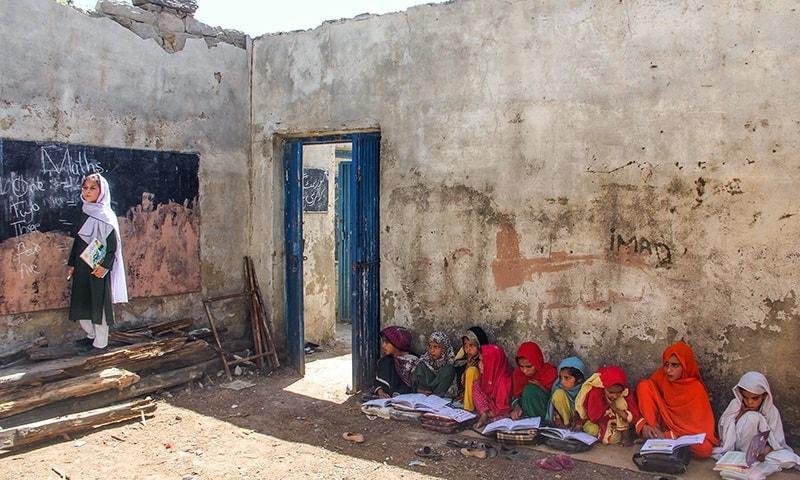
According to the Schools Statistical Report 2024–25, KP has 34,784 government schools, including 14,249 designated for girls. However, the condition of educational infrastructure remains concerning, with 19,224 classrooms requiring reconstruction and another 17,743 needing major repairs.
The situation is further complicated by shortages of basic facilities. More than 11% of government schools lack electricity, around 4% have no boundary walls, approximately 4% lack proper toilets, and 2% do not have drinking water.
These shortcomings affect all students, but girls often face additional barriers. In rural and underserved communities, the absence of secure boundary walls, functional toilets and adequate sanitation can discourage parents from sending their daughters to school or allowing them to continue their education.
The shortage of secondary-level institutions presents another significant challenge. Of the 14,249 government girls’ schools in the province, only 2,601 offer middle, high or higher secondary education. This limits opportunities for girls who complete primary education, particularly in areas where secondary schools are located far from their communities.
The consequences are visible in enrolment figures. The report records a secondary-level net enrolment ratio of 19.89% for girls, compared with 28.19% for boys, reflecting a substantial gender gap in educational participation.
Qamar Naseem, Programme Manager at Blue Veins and Malala Fund Education Champion, says school infrastructure must be recognised as a fundamental component of educational equality.
“School infrastructure is not merely about constructing buildings, it is about creating safe, inclusive and dignified spaces where girls can learn without fear,” he emphasises, calling for gender-responsive planning, adequate financing and stronger accountability.
Addressing the crisis requires more than building additional classrooms. The provincial government needs comprehensive structural assessments of public and private schools, reconstruction of unsafe buildings and strict enforcement of construction standards.
Investment in boundary walls, sanitation, drinking water, accessible facilities and adequate classrooms must also be prioritised, particularly in underserved districts.
The Peshawar tragedy should serve as a wake-up call for policymakers. Access to education means little if children cannot attend school safely. For girls across Khyber Pakhtunkhwa, secure and properly equipped educational institutions are essential to improving enrolment, preventing dropouts and ensuring a better future.
Note: This is an edited and condensed version of the supplied article. The original statistics and quotations should be verified against their cited reports and the author’s approved text before publication.
Disclaimer:
This article is an opinion and analysis piece based on publicly available information, reported statistics and the views expressed by the author. The facts, figures and statements are presented in good faith for public awareness and discussion. The views expressed in this article are those of the author, Farhan Khalil, and do not necessarily reflect the official position of Timeline News Islamabad. Readers are encouraged to consult original reports and official sources for further verification.