
‘No One Can Stop It’: Mohsin Naqvi Backs New Administrative Units
ISLAMABAD: Interior Minister Mohsin Naqvi has called for a major “reset” of Pakistan’s administrative system, arguing that new administrative units should be considered if they can improve governance and bring state services closer to citizens.
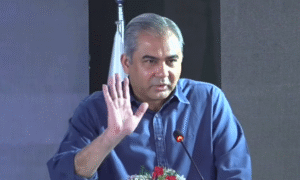
Addressing a National Policy Dialogue seminar at the University of Management and Technology (UMT) in Lahore on Saturday, Naqvi said Pakistan’s administrative structure must evolve according to the country’s growing population and changing needs.
He questioned why new districts, divisions and tehsils could be created while proposals for new provinces or administrative units often faced political resistance.
Naqvi stressed that no individual, political party or government should unilaterally decide the future administrative map of the country.
“If the people of Pakistan want new administrative units, they should be created, and if the public does not want them, they should not be created,” he said.
‘The system needs a reset’
The interior minister clarified that his call for a “reset” did not mean removing a particular government, political party or existing political arrangement.
Instead, he said, the country needed to review an administrative system that had been operating for nearly eight decades.
Naqvi said successive governments had introduced policies, budgets and development projects, but Pakistan still struggled to provide citizens with basic necessities such as quality education, healthcare, clean drinking water and timely justice.
He argued that the effectiveness of the existing administrative structure needed to be seriously examined because its benefits were not reaching ordinary citizens adequately.
Islamabad province proposal
Mohsin Naqvi also voiced strong support for making Islamabad a province, saying residents of the federal capital deserved a more effective administrative and financial framework.
He questioned why Islamabad should remain dependent on its existing arrangement when citizens elsewhere receive provincial resources through established mechanisms.
According to Naqvi, Islamabad represents a special case that deserves serious consideration, and political parties should collectively explore the possibility of giving the capital provincial status.
Power must reach the grassroots
The interior minister said the debate over new administrative units was ultimately linked to the transfer of authority to lower levels of government.
He maintained that political and administrative interests often resist decentralisation because it means shifting power closer to ordinary citizens.
Mohsin Naqvi said any reform must remain within the Constitution and the law, but argued that the Constitution provides sufficient room for improving governance and decentralising authority.
He called for Parliament, political parties, provincial governments, experts and other stakeholders to conduct a detailed debate before any final decision is made.
No predetermined map or formula
Naqvi said the country should not begin the process with a predetermined map, formula or number of provinces.
Instead, the government should first examine the potential benefits, administrative requirements, financial implications and geographical considerations before seeking the public’s opinion.
He said the eventual decision should be accepted by all stakeholders.
The minister also rejected the idea that creating new administrative units would automatically undermine linguistic, cultural or regional identities.
He said people could retain their identities while administrative boundaries were reorganised to improve governance.
Better services, not fewer jobs
Naqvi argued that administrative restructuring should not mean reducing the number of teachers, doctors, nurses or police personnel.
Rather, he said, the objective should be to strengthen institutions, increase administrative authority and improve accountability at the local level.
He also highlighted the potential benefits of bringing High Court benches closer to citizens, saying easier access to justice could reduce the difficulties faced by people seeking legal remedies.
‘I will not back down’
Naqvi said he was prepared to continue advocating administrative reforms regardless of his political position or government office.
He urged all political parties to set aside political differences and discuss the issue in Parliament.
The minister said the question of how many administrative units Pakistan needs, where their boundaries should lie and how they should be financed requires serious national debate rather than emotional reactions.
He emphasised that the central consideration should be the public interest.
“If new administrative units are the voice of the people, they will become a reality,” Naqvi said, adding that no single person, political party or representative should be able to prevent a decision backed by the people.
Naqvi concluded that any restructuring of Pakistan’s administrative system must ultimately serve future generations by improving governance, accountability, service delivery and access to state institutions.