
US Warns Iran Against Using Strait of Hormuz as Economic Leverage
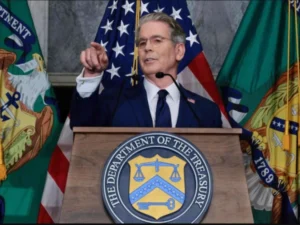
WASHINGTON: US Treasury Secretary Scott Bessent has warned that Iran must not be allowed to use the Strait of Hormuz as leverage against the global economy and international trade, as tensions over the strategic waterway continue to escalate.
According to the US Treasury Department, Bessent discussed the situation during a phone call with Bahrain’s Finance Minister Sheikh Salman bin Khalifa Al Khalifa. The talks focused on economic pressure against Iran, including the ongoing “Operation Economic Outcast.”
The US Treasury said the two officials also discussed developments surrounding the Strait of Hormuz. Bessent stressed that Iran should not be permitted to threaten global commerce or exploit the strategically important waterway as a tool to exert pressure on the international economy.
US vows continued economic pressure on Iran
Bessent also emphasized the importance of maintaining sustained financial pressure on Iran. He said Washington would continue targeting remaining financial channels and economic mechanisms that support the Iranian economy.
The US Treasury secretary further warned that the United States would hold accountable individuals and entities providing financial assistance or facilitating economic activity for the Iranian government.
Washington maintains that intensified economic pressure can restrict Iran’s financial and commercial activities and reduce the resources available to its government.
US, Gulf states seek closer financial cooperation
According to the Treasury Department, Bessent and Bahrain’s finance minister also underlined the importance of continued coordination between the United States, Bahrain and other members of the Gulf Cooperation Council (GCC).
The officials agreed to strengthen joint efforts against illicit financial activity and improve economic security across the region. Their cooperation is expected to include measures aimed at preventing misuse of financial systems and curbing illegal financial transactions.
Why the Strait of Hormuz matters
The Strait of Hormuz is one of the world’s most strategically important maritime routes for energy and international trade. A significant volume of oil and gas shipments destined for global markets passes through the waterway.
Any major disruption to shipping through the strait could therefore have significant consequences for global energy markets, potentially affecting oil prices, transportation costs and broader international trade.
The issue has gained renewed international attention amid continuing tensions between Iran and the United States. Tehran’s position on the Strait of Hormuz and Washington’s demands for uninterrupted navigation have added to economic and security concerns across the Gulf.
Bessent’s latest discussions with his Bahraini counterpart indicate that Washington is pursuing economic and financial pressure alongside its broader strategy toward Iran. Closer coordination with Gulf states is also emerging as an important component of US efforts to strengthen sanctions enforcement and counter illicit financial networks.