Trump Calls Strait of Hormuz ‘New US Territory’ in Controversial Map
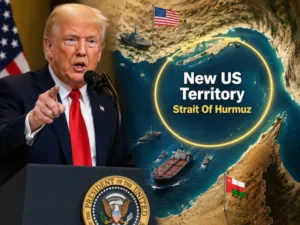
WASHINGTON, August 18, 2026: US President Donald Trump has reignited controversy over the strategic Strait of Hormuz after sharing a map on his Truth Social account that labelled the vital waterway as “New US Territory.”
The map showed the Strait of Hormuz, located between Iran and Oman, highlighted with a circle and marked with the provocative description. Trump did not add a written caption to the post.
The development comes days after Trump publicly backed the idea of treating the strategically important waterway as US territory. When questioned about what he meant by the proposal, Trump reportedly said that the United States controls the strait.
Trump has also repeatedly claimed that Washington has the ability to control the waterway amid escalating tensions with Iran.
Who Controls the Strait of Hormuz?
Despite Trump’s assertions, maritime law experts say military control does not automatically translate into legal ownership.
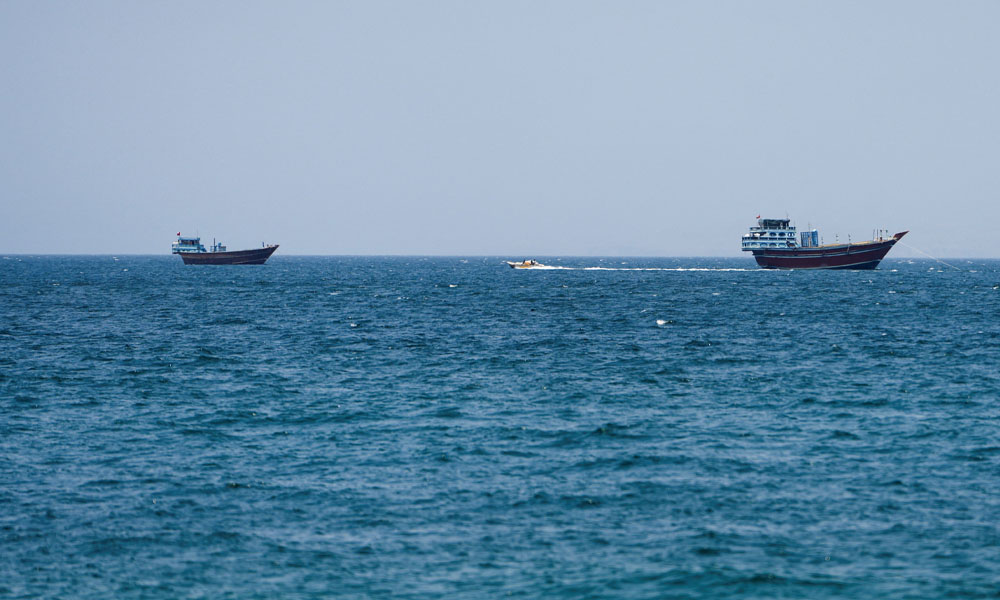
The Strait of Hormuz connects the Persian Gulf with the Gulf of Oman and is roughly 50 kilometres wide at its narrowest points. Iran lies to its north while Oman is located to the south.
Parts of the strait fall within the territorial waters of Iran and Oman, while international maritime law provides rights of navigation through the strategically important passage.
Legal experts have stressed that neither the United States nor any other country can simply claim the entire waterway as its sovereign territory through a unilateral presidential declaration.
Legal Hurdles for a US Territorial Claim
Maritime law specialists cited in reports have said that turning the Strait of Hormuz into US territory would require far more than a presidential announcement.
Under US constitutional arrangements, acquiring new territory involves legal and political procedures. Internationally, a unilateral attempt to annex another state’s maritime territory could also raise serious questions under the UN Charter and international law.
Experts have further noted that any legitimate transfer of territorial rights would generally require the consent of the relevant state or a formal legal agreement.
Military Control Does Not Mean Ownership
Experts have also rejected the argument that controlling a sea route militarily establishes legal ownership.
A navy may exercise temporary or operational control over a maritime passage, particularly during a conflict, but such control does not by itself transfer sovereignty.
The Strait of Hormuz is considered one of the world’s most strategically important maritime chokepoints, with international shipping and navigation rules playing a crucial role in its operation.
Why the Strait Matters
The Strait of Hormuz is a critical route for global energy supplies, connecting major oil-producing states in the Persian Gulf with international markets.
Any prolonged disruption or military confrontation around the waterway could therefore have significant consequences for oil supplies, shipping costs and global energy markets.
Trump’s latest social media post is likely to fuel further debate over Washington’s ambitions in the region, particularly as tensions between the United States and Iran remain high.
Table of Contents