G20 Foreign Ministers’ Talks End Without Consensus Amid Deep Divisions
G20 Talks End Without Deal as Russia Dispute Divides Members
Disagreements over Russia’s participation prevented a joint declaration and forced the cancellation of the traditional group photograph at the Atlanta meeting.
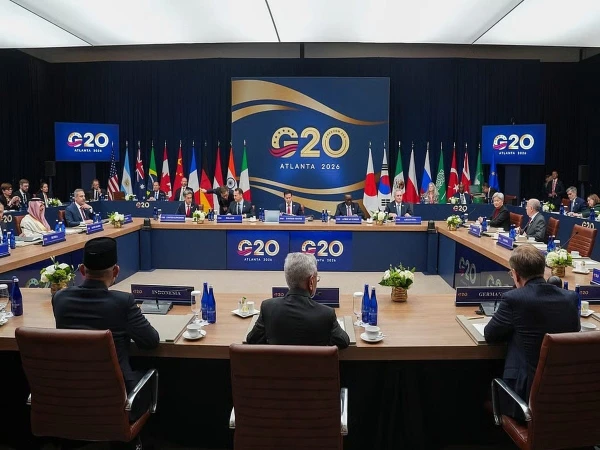
The G20 Foreign Ministers’ Meeting in Atlanta, United States, has concluded without a joint declaration, as disagreements among major powers overshadowed discussions on pressing international challenges.
The two-day gathering brought together foreign ministers to discuss a range of geopolitical and economic issues, including the Russia-Ukraine conflict, the ongoing war involving the United States, Israel and Iran, American trade tariffs and growing tensions in the South China Sea.
Despite extensive discussions, participating countries failed to reach a common position on key matters. US Secretary of State Marco Rubio instead issued a chair’s statement highlighting areas where members shared common priorities.
Tensions over Russia’s participation also disrupted the meeting’s traditional proceedings. European diplomats reportedly raised objections to the presence of Russian Foreign Minister Sergey Lavrov, resulting in the cancellation of the customary group photograph.
Maritime security was another major subject of discussion, particularly the need to ensure uninterrupted commercial shipping through strategic waterways such as the Strait of Hormuz and Bab el-Mandeb. Participants also exchanged views on energy security, food supplies and the stability of international supply chains.
The Middle East situation added further urgency to the discussions. Iran warned Washington and Tel Aviv against continuing military attacks, while Saudi Arabia claimed to have successfully intercepted a drone attack.
Although the meeting ended without a broader agreement, participating countries agreed to maintain diplomatic efforts to ensure a successful G20 Leaders’ Summit scheduled to take place in Florida next month.
Rubio acknowledged that substantial differences remain between countries, underlining the diplomatic challenges facing the international community in addressing major global crises.