
BISP, WFP, WHO, UNICEF EXTEND PARTNERSHIP TO PROTECT 3.3 MILLION CHILDREN AND WOMEN FROM MALNUTRITION IN PAKISTAN
ISLAMABAD: The Benazir Income Support Programme (BISP), in collaboration with the United Nations World Food Programme (WFP), the United Nations Children’s Fund (UNICEF), and the World Health Organization (WHO), has announced a three-year extension of the Benazir Nashonuma Programme to protect an additional 3.3 million pregnant women, breastfeeding mothers, and young children from malnutrition across Pakistan.
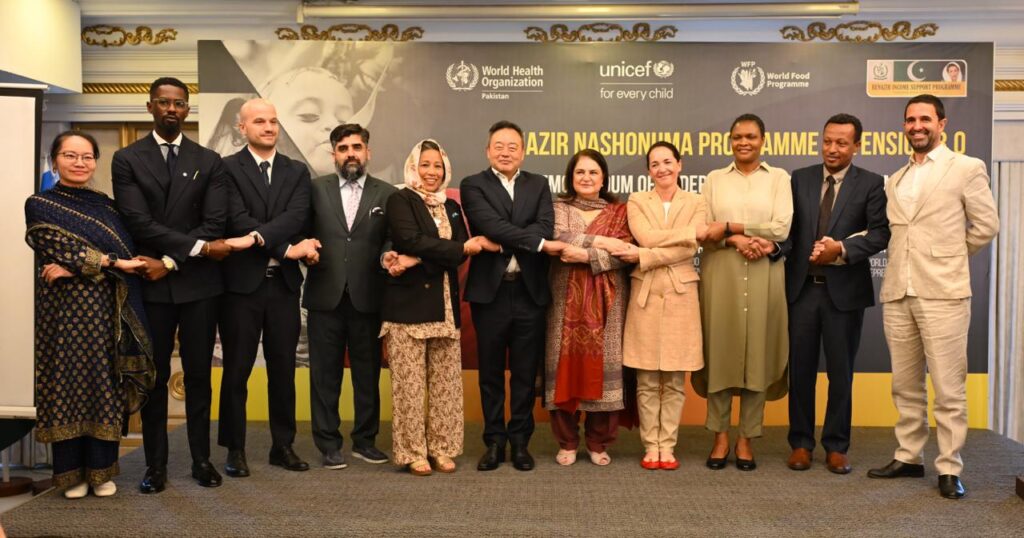
Launched in 2020, the programme provides nutrition and healthcare services to vulnerable pregnant and lactating women and children under the age of two through 578 facilitation centres and 224 nutrition stabilization centres nationwide. So far, it has benefited 4.7 million people, and with the latest extension, the programme’s total reach is expected to expand to 8 million beneficiaries.
Speaking at the signing ceremony, BISP Chairperson Senator Rubina Khalid said the Benazir Nashonuma Programme reflects the vision of Shaheed Mohtarma Benazir Bhutto to ensure that no mother or child is left behind because of poverty.
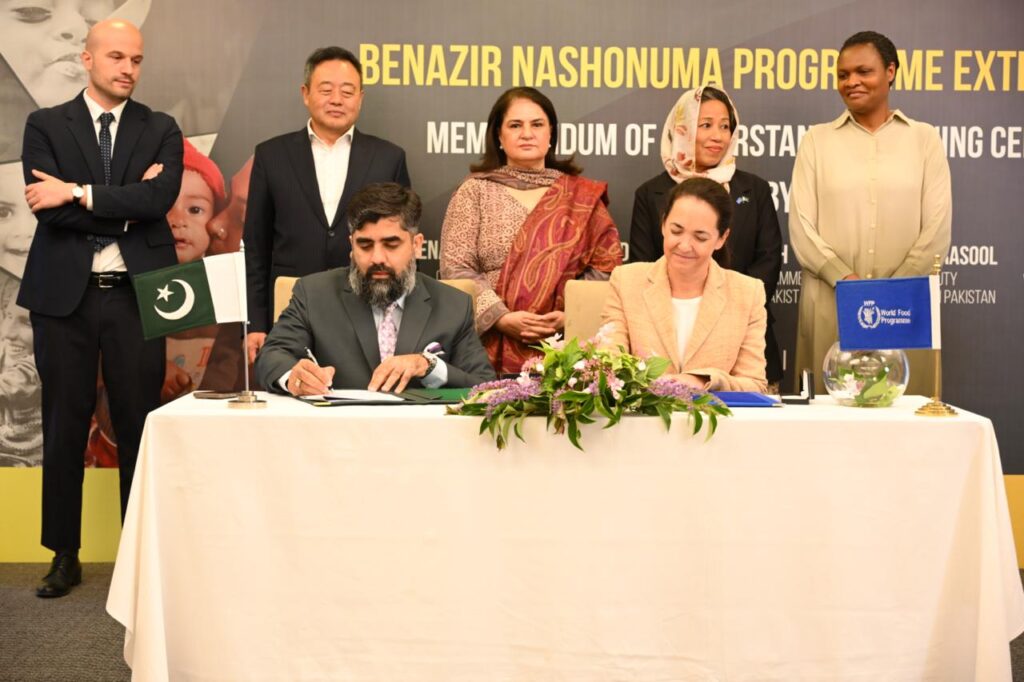
She described the signing of Benazir Nashonuma Programme 3.0 as a renewed national commitment to providing every child with a healthier start in life while improving opportunities for mothers through integrated social protection, nutrition, and healthcare services.
The programme has produced encouraging results, with participating children reported to be 22 percent less likely to suffer from stunting by six months of age, making it one of the most effective nutrition initiatives documented globally.
According to official data, nearly 40 percent of children under five in Pakistan are stunted, affecting around 10 million children, while 17.7 percent suffer from wasting, impacting approximately 5 million children. Malnutrition is estimated to cost Pakistan nearly 17 billion US dollars annually in economic losses.
Officials noted that integrating nutrition services into Pakistan’s social protection system has also improved maternal nutrition, increased antenatal care visits, promoted healthier pregnancies, and contributed to better birth outcomes.
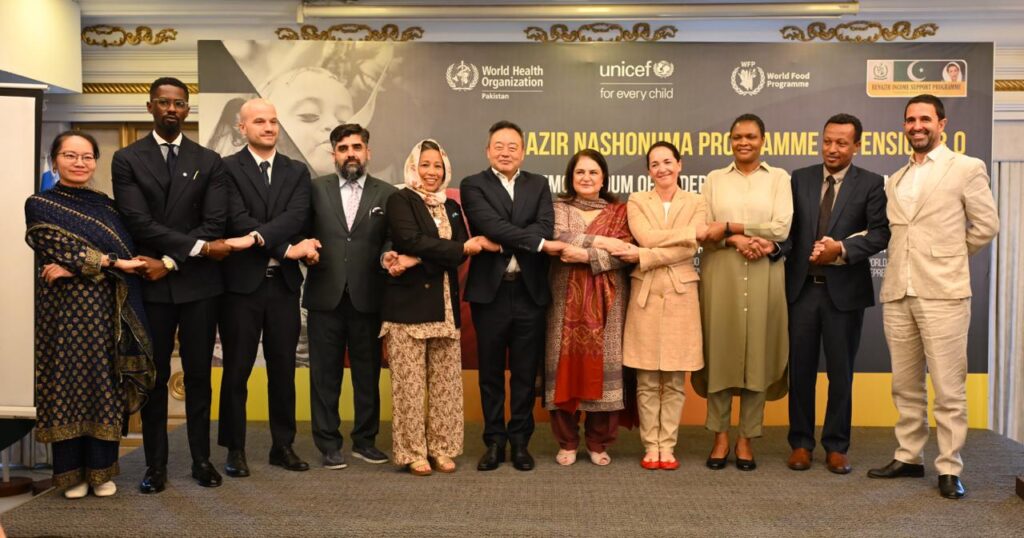
WFP Pakistan Representative and Country Director Anita Hirsch said the programme has shown highly promising results in preventing child malnutrition. She added that the three-year extension would enable WFP to continue supporting the Government of Pakistan and BISP in expanding access to essential nutrition services for mothers and children.
UNICEF Deputy Representative Sharmeela Rassool praised Pakistan’s commitment to nutrition-responsive social protection, saying continued collaboration with BISP, WFP, and WHO would strengthen nutrition systems, improve access to life-saving interventions, and empower communities with better childcare and nutrition practices.
WHO Representative in Pakistan Dr Luo Dapeng said the programme demonstrates the effectiveness of science-based, integrated approaches that combine health, nutrition, social protection, food systems, water and sanitation, and education. He reaffirmed WHO’s commitment to supporting Pakistan in protecting the health of every mother and child.
The renewed partnership aims to strengthen Pakistan’s nutrition and health services while reducing child malnutrition and improving maternal and child wellbeing across the country.
Table of Contents
Read More
Faryal Talpur Commends BISP Reforms and Expansion of Social Protection Initiatives