COP31 Climate Conference

Shehbaz Sharif Demands Climate Justice at COP31
Shehbaz Sharif Calls for Climate Justice at COP31, Urges Global Powers to Support Developing Nations
Prime Minister highlights Pakistan’s climate vulnerabilities, seeks $188 billion for low-carbon energy projects and demands financial assistance instead of additional debt for climate-hit countries.
Prime Minister Shehbaz Sharif has urged the international community to ensure climate justice by preventing developing and debt-burdened countries from bearing the financial consequences of climate change, despite contributing relatively little to global carbon emissions.
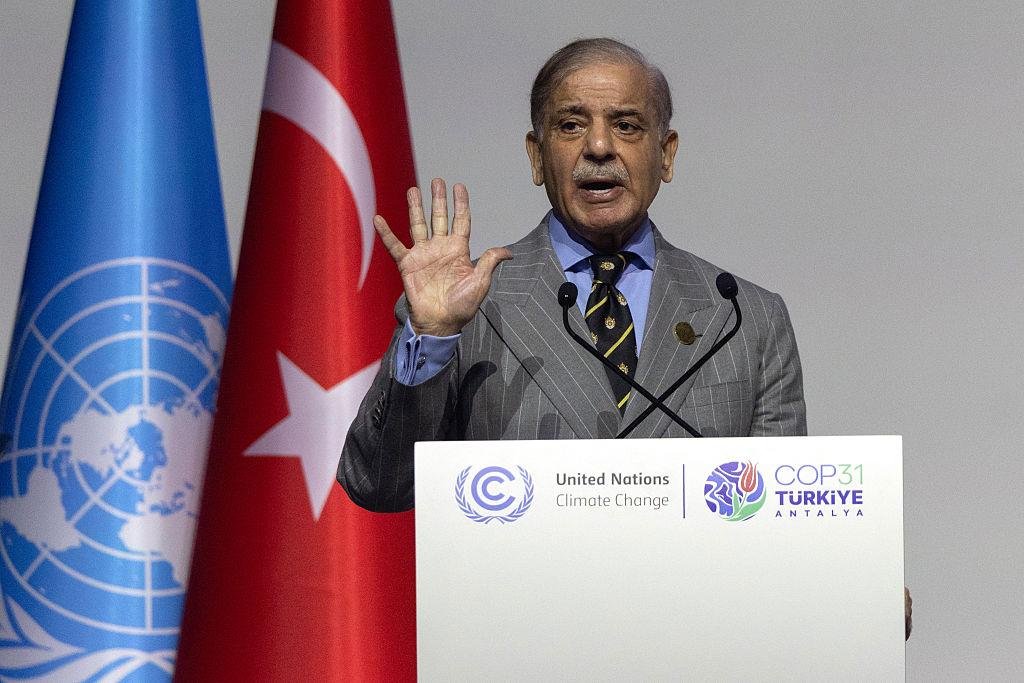
Addressing the COP31 climate conference in Türkiye, the prime minister stressed that countries suffering the worst consequences of environmental degradation must receive meaningful financial and technical assistance from wealthier nations.
He said Pakistan remained committed to tackling climate change but required approximately $188 billion to develop low-carbon electricity projects. Given the country’s economic challenges and mounting debt obligations, mobilising such substantial resources independently would be extremely difficult.
The prime minister’s remarks highlighted a growing concern among developing countries: nations with limited responsibility for global emissions are increasingly facing devastating climate-related disasters, while the financial burden of recovery continues to fall disproportionately on their economies.
Pakistan Faces Growing Climate Risks
Pakistan is among the countries highly vulnerable to climate change. Over recent years, the country has experienced devastating floods, unusually heavy rainfall, prolonged heatwaves, droughts and accelerated glacier melting.
The catastrophic floods of 2022 exposed the country’s vulnerability, submerging vast areas, displacing millions of people and causing extensive damage to infrastructure, agriculture, livelihoods and the national economy.
Recovery remains a major challenge, while recurring extreme weather events continue to threaten communities, food security, water resources and economic stability.
In northern Pakistan, rapidly melting glaciers and the growing threat of glacial lake outburst floods have created additional risks. Rising river levels, agricultural losses and water shortages are becoming increasingly serious concerns.
These challenges underline the need for stronger climate adaptation measures, resilient infrastructure and international financial cooperation.
Climate Finance Should Not Increase Developing Countries’ Debt
A central concern raised by Pakistan is the nature of international climate financing.
Developing countries argue that climate assistance should not become another source of debt for economies already struggling with financial constraints. Instead, countries that have historically contributed more to global emissions should provide grants and affordable financing to help vulnerable nations recover and strengthen their climate resilience.
Although international climate agreements have introduced climate funds and financial commitments, developing countries continue to face difficulties in accessing adequate resources.
Climate justice requires more than announcing financial pledges. It demands transparent funding mechanisms, timely disbursement and accountability to ensure that assistance reaches the communities and countries most affected.
Developed Nations Urged to Accept Their Responsibility
The prime minister’s address also brought renewed attention to the responsibility of major industrial economies in addressing global environmental challenges.
The United States’ reported absence from the conference was particularly regrettable, given its position as one of the world’s largest economies and historical contributors to greenhouse gas emissions.
Global climate cooperation cannot achieve meaningful progress if major economic powers remain disengaged from collective efforts.
The United Nations Secretary-General has repeatedly called on industrialised nations to support countries facing the devastating consequences of climate change. However, the gap between international commitments and practical assistance remains a major concern.
Diplomatic Engagements on the Sidelines of COP31
During his visit to Türkiye, Prime Minister Shehbaz Sharif also held meetings with Iranian President Masoud Pezeshkian and the prime ministers of Kuwait, Bangladesh and Palestine.
The discussions focused on regional peace, development and strengthening bilateral cooperation.
During his meeting with the Iranian president, the prime minister emphasised the importance of moving forward under the Islamabad Memorandum of Understanding, reflecting Pakistan’s interest in diplomatic engagement and regional stability.
These interactions demonstrated that Pakistan continues to pursue cooperation with regional and international partners on issues extending beyond climate change.
Pakistan Needs Greater Investment in Clean Energy
While seeking international assistance, Pakistan must also strengthen its domestic climate strategy.
Expanding solar and wind energy, improving water management, protecting forests, increasing tree plantation, developing water storage facilities and adopting modern agricultural technologies are essential steps towards reducing environmental vulnerabilities.
Greater investment in renewable energy and low-carbon electricity generation can help Pakistan reduce emissions while improving long-term energy sustainability.
However, achieving these objectives requires substantial financial resources, modern technology and technical expertise, making international cooperation particularly important.
Pakistan should also work with other developing countries to establish a stronger collective position at international climate forums and demand fairer access to climate finance.
Climate Justice and Global Peace Must Go Hand in Hand
The growing climate crisis is unfolding alongside wars, regional conflicts and rising military expenditure. These competing global priorities raise important questions about how international resources are being allocated.
Trillions of dollars spent on military competition and destructive conflicts could instead contribute to poverty reduction, sustainable development, environmental protection and climate resilience.
Global leaders must recognise that peace, economic development and environmental sustainability are interconnected priorities.
The message delivered by Prime Minister Shehbaz Sharif at COP31 should therefore translate into practical international action rather than remain another diplomatic statement.
Developed nations must honour their climate commitments, provide accessible financial support and help vulnerable countries adapt to an increasingly unpredictable environment.
For Pakistan and other climate-vulnerable nations, climate justice is not simply a matter of international diplomacy. It is essential for economic survival, human security and the protection of future generations.