
Pakistan Targets Digital Sovereignty Through AI, 5G and Cybersecurity
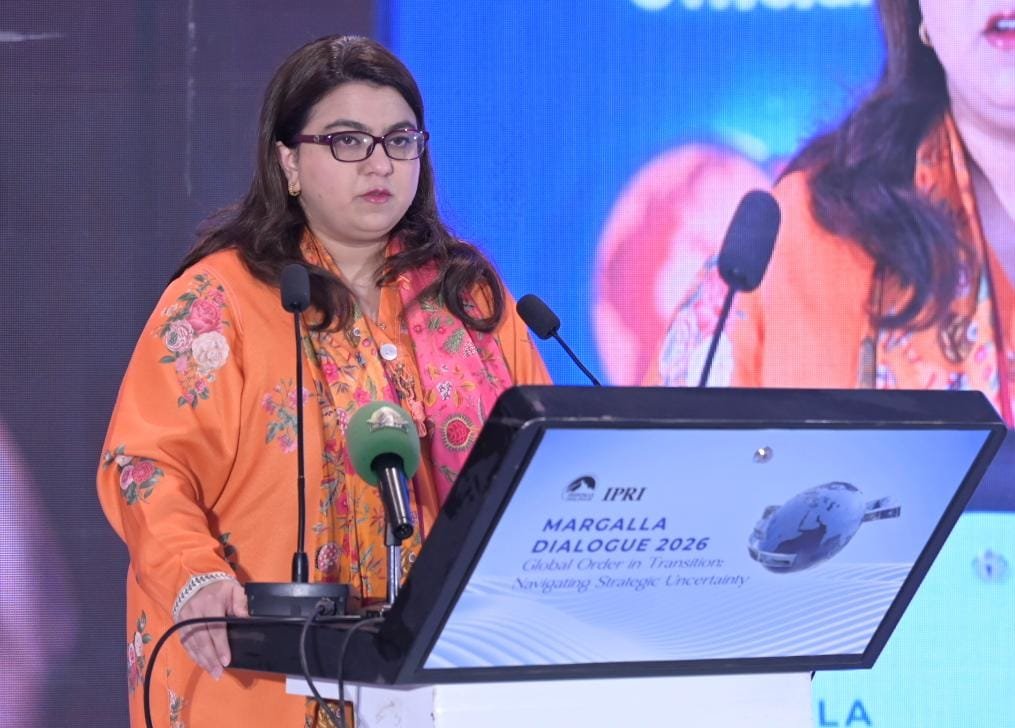
Pakistan Determined to Become a Digital Sovereignty Nation; AI, Connectivity and Cybersecurity at the Core of National Transformation: Shaza Fatima khawaja.
Government announces plans to train one million young people in AI skills, produce 10,000 AI PhDs and invest $1 billion in artificial intelligence over the next five years.
ISLAMABAD: Pakistan is determined to become a digitally sovereign nation by strengthening artificial intelligence (AI), expanding internet connectivity, improving cybersecurity and investing in young talent, Federal Minister for Information Technology and Telecommunication Shaza Fatima Khawaja has said.
Addressing the Margalla Dialogue 2026 on Technology and Transformation of State and Society, the minister said Pakistan aims to turn the rapid global technological transformation into an opportunity for economic growth, national development and technological independence.
She highlighted that technology is reshaping education, healthcare, finance, social protection and national security, while artificial intelligence is accelerating changes in economies, employment and governance.
The minister said Pakistan’s young population, which accounts for approximately two-thirds of the country’s total population, represents a major opportunity. However, she stressed that protecting national identity, languages, culture and social values in the digital age is equally important.
Pakistan Announces $1 Billion AI Investment
Shaza Fatima recalled that Prime Minister Shehbaz Sharif had announced an investment of $1 billion in artificial intelligence during AI Week.
The investment will focus on four major areas:
- AI infrastructure and computing capacity.
- Skills development and training.
- Innovation and research.
- Connectivity and digital access.
She said Pakistan is developing a multi-layered AI infrastructure framework to provide sovereign computing resources to government institutions, businesses and technology innovators.
The government is also encouraging private-sector investment, including the proposed 8.5-megawatt Sky 47 data centre and potential investments involving major business groups such as Porton Group and Sapphire Group.
Internet Speeds Increase by 60 Percent
Highlighting progress in the country’s digital infrastructure, the minister said internet speeds in Pakistan have increased by 60 percent over the past two and a half years, according to Ookla.
She also pointed to growing internet consumption, the addition of international submarine cables and the country’s largest-ever spectrum auction.
Pakistan’s spectrum capacity has increased from 274 MHz to more than 750 MHz, following the allocation of 180 MHz of additional spectrum.
The government is also accelerating the introduction of 5G services and expanding fibre-optic connectivity across the country.
According to the minister, fibre-to-the-home coverage has increased from fewer than three million to more than six million house passes.
One Million Young People to Receive AI Training
The minister announced an ambitious human resource development programme under which the government aims to train one million young Pakistanis in AI-related skills and produce at least 10,000 AI PhDs over the next five years.
She said the initiative would help prepare Pakistan’s workforce for the changing global employment landscape.
Citing international projections, she noted that AI could become a $4.8 trillion economic sector by 2033 and affect approximately 40 percent of jobs worldwide.
She stressed that the biggest challenge is not simply job displacement but the widening gap between existing skills and the requirements of emerging industries.
Digital Nation Pakistan Act to Drive Transformation
Shaza Fatima described the Digital Nation Pakistan Act as a foundational framework for the country’s digital transformation.
The legislation established the Pakistan Digital Authority (PDA), which is working on a National Digital Master Plan and sector-specific strategies covering agriculture, healthcare, real estate and other important sectors.
She said data governance, privacy, security and responsible access to information would remain central to the government’s digital transformation agenda.
The government is also moving towards paperless operations, while NADRA’s digital identity initiative has already enabled more than two million people to obtain digital identity credentials.
She further highlighted cooperation with the State Bank of Pakistan and the RAAST payment system to strengthen digital financial services.
National AI Policy and Data Protection
The minister said Pakistan is developing a National Data Governance Policy and piloting a National Data Exchange Layer to enable secure and responsible data sharing between institutions.
She emphasised that the National AI Policy and data governance framework would follow the principle of keeping humans in the loop, ensuring that people remain accountable for decisions involving artificial intelligence and data.
She also said a data protection law was nearing completion, highlighting the importance of consent, privacy and public trust in digital systems.
Cybersecurity Becomes a National Priority
Addressing national security challenges, Shaza Fatima said modern conflicts are no longer restricted to conventional military operations but increasingly involve cyber warfare and digital threats.
Referring to the May conflict with the neighbouring country, she highlighted the importance of cyber capabilities alongside traditional defence systems.
She expressed confidence in Pakistan’s cybersecurity capabilities and said the government was adopting a whole-of-government approach to strengthen national cyber defence.
The minister also referred to Pakistan’s position among the world’s top 40 countries in the cybersecurity index.
She stressed that cybersecurity, responsible AI and digital trust must be incorporated into technological systems from the design stage rather than treated as separate initiatives.
Pakistan Seeks Greater Role in Global AI Governance
The minister called for inclusive international cooperation to ensure developing countries are not excluded from the global AI revolution.
She highlighted Pakistan’s participation in international initiatives, including the UN AI Digital Compact, the Bletchley process and the Digital Cooperation Organization (DCO), alongside its engagement with the International Telecommunication Union (ITU).
She said access to AI infrastructure, open-source models and advanced computing resources should not become a source of global inequality.
The minister also highlighted plans to strengthen Pakistan’s startup ecosystem through grants, improved access to capital and a Fund of Funds being developed with support from the World Bank and other development partners.
Concluding her address, Shaza Fatima reaffirmed that Pakistan would continue investing in digital infrastructure, artificial intelligence, cybersecurity and human capital.
She expressed confidence that strong institutions, international partnerships and investment in young people would help Pakistan emerge as a digitally empowered and technologically sovereign nation.