
Hague Arbitration Court Orders India to Follow Indus Waters Treaty, Limits Hydropower Projects
THE HAGUE, August 31, 2026: A major legal development in the long-running Pakistan-India water dispute emerged on Monday as an arbitration tribunal in The Hague ruled that the Indus Waters Treaty remains in force and rejected the basis for its unilateral suspension by India.
The ruling is significant for Pakistan, which has consistently maintained that the 1960 water-sharing agreement cannot be suspended or terminated by either country through unilateral action.
According to the decision, India remains bound by its obligations under the treaty despite its announcement to place the agreement in abeyance following the April 2025 Pahalgam attack in Indian-administered Kashmir.
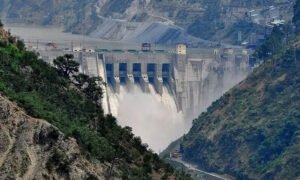
The tribunal also issued directions concerning hydropower projects in the Himalayan region. Certain construction activities have been restricted while questions surrounding the projects’ compliance with the treaty are examined.
The dispute has particularly focused on projects including the Ratle and Kishanganga hydropower schemes, with Pakistan raising concerns over their design, water storage and potential impact on downstream flows.
Under the Indus Waters Treaty, Pakistan has primary rights over the waters of the western rivers—the Indus, Jhelum and Chenab—while India has rights over the eastern rivers, namely the Ravi, Beas and Sutlej. The agreement also permits India to undertake certain hydropower activities on the western rivers, subject to specified technical and operational conditions.
Pakistan Welcomes Hague Ruling
The Government of Pakistan welcomed the tribunal’s decision, saying it reinforces the continued legal validity of the Indus Waters Treaty.
Islamabad said the tribunal did not accept India’s position that the agreement could be unilaterally suspended or terminated. Pakistan also welcomed the measures concerning hydropower projects and said the decision could help create space for renewed engagement under the treaty framework.
The government said it would carefully examine the detailed ruling and assess how it could contribute to restoring communication and cooperation between the two countries on water-related matters.
Pakistan has repeatedly argued that the treaty provides a permanent legal framework for managing shared river waters and contains mechanisms for resolving disputes between the two sides.
India Rejects Tribunal’s Position
India, however, rejected the latest proceedings and maintained that it does not recognize the tribunal’s existence or jurisdiction in the matter.
The Indian Ministry of External Affairs reportedly described the tribunal as an improperly constituted forum and reiterated that New Delhi’s decision to keep the Indus Waters Treaty in abeyance remains unchanged.
India has previously linked its decision to suspend the treaty to the Pahalgam attack, which killed 26 people in April 2025. New Delhi accused Pakistan of supporting cross-border terrorism, allegations Islamabad has rejected.
The contrasting positions underline the wider political and legal dispute surrounding the treaty.
Water Treaty at the Centre of a Wider Dispute
Signed in 1960 with the World Bank’s assistance, the Indus Waters Treaty has survived several periods of intense conflict between Pakistan and India and has traditionally been viewed as one of the more durable bilateral agreements between the two countries.
The current dispute intensified after India’s announcement in April 2025 that it was placing the treaty in abeyance.
Pakistan challenged that position, arguing that the agreement contains no provision allowing either party to suspend it unilaterally.
The latest ruling adds another layer to the dispute by affirming the tribunal’s view that the treaty continues to operate and that India’s decision does not prevent the dispute-resolution process from proceeding.
Independent Review of Hydropower Projects
The tribunal’s decision also leaves an important role for an independent expert appointed through the World Bank.
The expert is expected to examine whether the disputed hydropower projects comply with the treaty’s provisions, with a decision on the relevant issues expected by July 2027.
For Pakistan, the proceedings are particularly important because agriculture and water security remain heavily dependent on the Indus river system.
For India, the dispute involves its interpretation of the hydropower rights available under the treaty and its broader objections to the arbitration process.
With both countries maintaining sharply different positions, the Indus Waters Treaty is likely to remain a key issue in Pakistan-India relations and regional water diplomacy in the months ahead.