CASS Highlights Institutional Reforms as Key to Pakistan’s Economic Growth
Pakistan’s Economic Challenges Linked to Weak Institutions, CASS Discussion Finds
CASS experts emphasise constitutional supremacy, accountability and institutional reforms to strengthen Pakistan’s economy and ensure sustainable development.
ISLAMABAD, November 27, 2026:** The Centre for Aerospace & Security Studies (CASS) has highlighted the need for stronger institutions, effective governance and consistent policy implementation to address Pakistan’s economic challenges and promote sustainable national development.
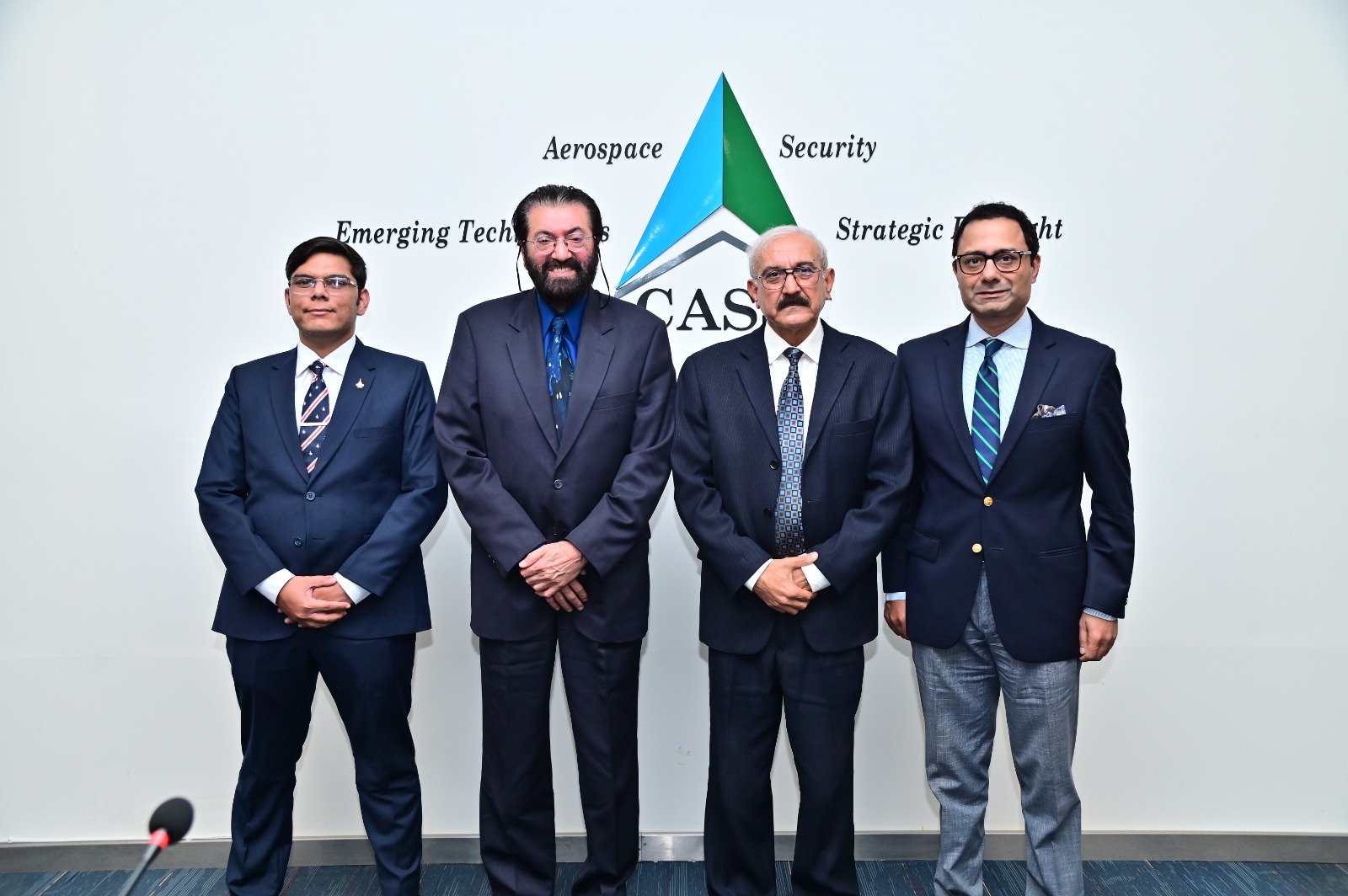
The think tank organised a Catalyst Conversation on November 24, 2026, under the theme “Institutions, Governance, and Economic Growth in Pakistan.” The discussion explored how political and economic institutions influence national prosperity, economic performance and political stability.
Dr Aqdas Afzal, Director CASS, moderated the session and highlighted the connection between institutional structures, economic stagnation and political instability. He pointed to Pakistan’s recurring economic boom-and-bust cycles, policy discontinuity and challenges surrounding institutional autonomy as key factors affecting the country’s economic progress.
Delivering the keynote address, Dr Tariq Banuri, former Chairman of the Higher Education Commission (HEC), discussed the evolving understanding of institutions in economic development.
He noted that while earlier economic theories primarily attributed growth to well-functioning markets, subsequent research increasingly recognised institutions as fundamental drivers of national prosperity.
Discussing Pakistan’s economic challenges, Dr Banuri said the legacy of colonial-era extractive institutions had created obstacles to meaningful reforms. He emphasised that sustainable development required a transformation in institutional culture rather than relying solely on the introduction of new policies.
Dr Banuri also stressed the importance of constitutional supremacy, accountability and effective governance. He called for all state institutions to uphold the 1973 Constitution and observed that institutional accountability was essential for improving public-sector performance and strengthening governance.
In his concluding remarks, CASS President Air Marshal Javaid Ahmed (Retd) emphasised that strong institutions were indispensable for sustainable economic growth and national stability.
He called for realistic and carefully sequenced institutional reforms, supported by effective leadership, to rebuild public confidence, improve governance and establish an enabling environment for inclusive economic development.
The discussion underscored that Pakistan’s long-term economic progress depends not only on sound economic policies but also on strong institutions, constitutional adherence, accountability and continuity in governance.
Table of Contents
Related Stories
Atta Tarar Inaugurates Kahakshan Mission Control Center in Islamabad

CASS Calls for Comprehensive Strategy to Address Afghanistan’s Evolving Challenges

Pakistan’s First Human Spaceflight Mission: Armed Forces Congratulate Nation on Historic Achievement