Pakistan’s 12-Province Plan: Could a New Administrative Map Transform the Country?
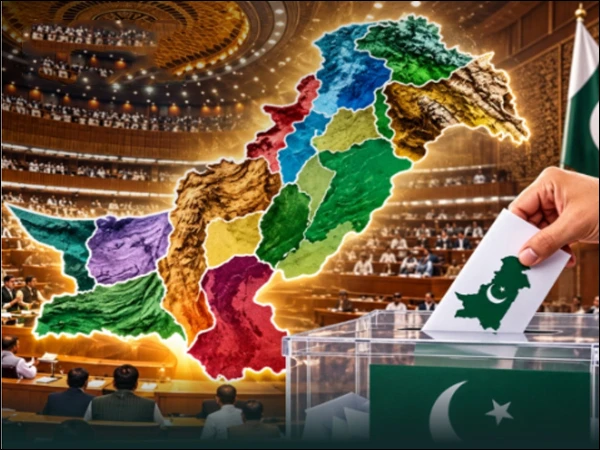
Pakistan 12 Provinces Plan: Can the Country Redraw Its Map?
Proposed division of four existing provinces raises questions about constitutional requirements, political consensus, provincial identity and the future of governance in Pakistan.
Written by : Waqas Ahmed Sheikh
Pakistan’s administrative structure could be heading for a major debate as proposals emerge to divide the country’s four existing provinces into 12 smaller administrative units. The idea, reportedly being considered ahead of a proposed 28th Constitutional Amendment, has also sparked discussion about holding a nationwide referendum to seek public opinion.
The proposal is being presented as a potential step towards better governance, improved public service delivery and a more balanced distribution of development resources. However, it also raises important questions about provincial identity, political representation, financial autonomy and constitutional procedures.
Can Pakistan realistically establish 12 provinces, and what would such a transformation mean for its political and administrative future?
What Would the Proposed 12-Province Structure Look Like?
According to the proposed administrative arrangement, Pakistan’s four existing provinces could be reorganised into 12 provinces.
The suggested distribution is:
- Punjab: Four provinces
- Khyber Pakhtunkhwa: Three provinces
- Balochistan: Three provinces
- Sindh: Two provinces
However, the proposal remains at an initial discussion stage. No final decision has been announced regarding boundaries, provincial capitals, administrative structures or the distribution of powers.
Different proposals concerning the division of Punjab, the creation of a Hazara province and changes to Sindh’s administrative structure have surfaced in political discussions over the years.
Therefore, the proposed 12-province map should not be considered a confirmed government plan at this stage.
Is Creating 12 Provinces Constitutionally Possible?
Pakistan’s Constitution does not prohibit the creation of additional provinces. However, such a major administrative change cannot be introduced through an ordinary government notification or a simple legislative measure.
Article 239 of the Constitution establishes the procedure for constitutional amendments. An amendment bill can be introduced in either the National Assembly or the Senate and requires approval by at least two-thirds of the total membership of both houses.
More importantly, if a constitutional amendment changes the boundaries of an existing province, it must also receive approval from the concerned provincial assembly by a two-thirds majority of its total membership.
The bill is subsequently presented to the President for assent.
This means that even if the federal government secures the required parliamentary majority, dividing an existing province would still require the constitutional approval of its provincial assembly.
Securing the necessary political support in all relevant provincial assemblies could therefore become the biggest obstacle to implementing the proposal.
Could a Nationwide Referendum Be Held?
Another idea reportedly under consideration is holding a nationwide referendum before introducing the proposed constitutional amendment.
Supporters believe a referendum could help establish public backing for the creation of new provinces and encourage political parties to reach a broader consensus.
However, several questions remain unanswered.
Would voters simply be asked whether they support the creation of additional provinces, or would they also be asked to approve specific provincial boundaries and proposed administrative arrangements?
A general public endorsement would not automatically determine the names, capitals, boundaries, financial powers or political representation of the proposed provinces.
Furthermore, the legal framework and constitutional status of such a referendum would need to be clearly established.
Regardless of the referendum’s outcome, the constitutional requirements under Article 239 would still have to be fulfilled.
What Could Be the Political Parties’ Position?
The proposed restructuring is likely to generate different reactions among Pakistan’s political parties because provincial boundaries are closely connected to political influence, cultural identity, language and control over resources.
Government and Supporters of New Provinces
Interior Minister Mohsin Naqvi has expressed support for establishing new administrative units, arguing that Pakistan’s growing population and changing requirements make a review of the existing administrative structure necessary.
He has also emphasised that such changes should reflect public wishes and follow constitutional procedures and political consensus.
Former prime minister Shahid Khaqan Abbasi has also supported smaller administrative units on administrative grounds, arguing that the issue should be considered from the perspective of governance rather than ethnic or linguistic divisions.
Supporters believe smaller provinces could bring government institutions closer to citizens and improve access to public services.
Pakistan Peoples Party and Sindh’s Division
The division of Sindh remains one of the most politically sensitive aspects of the proposal.
The Pakistan Peoples Party has historically opposed dividing Sindh, viewing the province’s territorial unity as closely connected to its political, historical and cultural identity.
During discussions about new administrative units in September 2026, opposition to dividing Sindh was reiterated by the party, while the Sindh chief minister also rejected the proposal.
If the idea of creating two provinces from Sindh formally advances, resistance from the PPP could become a major political challenge.
MQM-Pakistan and Urban Sindh
MQM-Pakistan has long advocated greater administrative decentralisation and improved governance arrangements for urban areas.
Party leaders, including Mustafa Kamal, have voiced support for establishing new administrative units.
However, the party’s final position on the proposed 12-province structure may depend on the suggested boundaries, distribution of powers and administrative arrangements.
Pakistan Tehreek-e-Insaf and Other Parties
The Pakistan Tehreek-e-Insaf has raised questions about the government’s handling of the proposal and the absence of the prime minister from the discussion.
The final position of PTI and other political parties is likely to depend on whether the restructuring follows consistent principles across all provinces and provides meaningful administrative and financial authority to the proposed units.
Potential Benefits of Creating 12 Provinces
One of the strongest arguments in favour of smaller provinces is improved administrative accessibility.
In several parts of Pakistan, citizens live far from their provincial capitals and must travel considerable distances to access government offices, healthcare facilities, educational institutions and administrative services.
New provincial capitals and government institutions closer to local populations could make public services more accessible.
Smaller provinces could also improve development planning and allow governments to focus more effectively on the needs of underserved regions.
Another potential benefit is a more balanced distribution of development resources. Smaller administrative units could give neglected districts greater political representation and a stronger voice in budgetary decisions.
However, these benefits would depend on effective governance, transparency and genuine decentralisation.
Financial and Administrative Challenges
Creating additional provinces would also bring significant financial responsibilities.
Each new province would require its own provincial assembly, chief minister, governor, cabinet, secretariat and administrative departments.
The establishment and operation of these institutions could increase public expenditure substantially.
Another major challenge would be the distribution of financial resources.
The government would need to determine how federal resources under the National Finance Commission framework would be allocated among the new provinces.
Questions involving provincial revenues, water distribution, electricity, minerals, natural resources, government assets and existing liabilities would also require clear arrangements.
The division of provincial employees, government departments and public institutions would further complicate the process.
Without careful planning, the creation of additional provinces could increase administrative costs without delivering meaningful improvements to ordinary citizens.
Could Karachi or Gwadar Receive a Different Administrative Status?
Discussions about Pakistan’s administrative future have also included proposals concerning Karachi and Gwadar.
Some circles have raised ideas about placing Karachi under federal administration or changing Gwadar’s administrative status.
However, these suggestions should not be treated as confirmed components of the proposed 12-province plan.
Any change to Karachi’s status would involve highly sensitive political and constitutional questions, particularly concerning Sindh’s provincial leadership and urban population.
Similarly, changing Gwadar’s administrative position would require careful consideration of Balochistan’s constitutional rights, local interests and provincial autonomy.
No final decision on these matters has been announced.
What Would Be Required to Implement the Plan?
If the government decides to pursue the proposal, a comprehensive national consultation process would be essential.
Federal and provincial governments, parliamentary parties, constitutional experts, economists, administrative officials and representatives of affected regions would need to participate.
A possible implementation framework could involve the following stages:
- National consultations to establish agreement on the principles of administrative restructuring.
- Detailed studies of proposed boundaries, populations, provincial capitals, financial resources and administrative costs.
- Determination of the legal framework and scope of a possible referendum.
- Preparation and approval of the constitutional amendment by the National Assembly and Senate.
- Securing the required two-thirds majority in the assemblies of provinces whose boundaries would be changed.
- Developing transition plans for budgets, government departments, employees, assets and financial arrangements.
- Gradually establishing the new provincial governments and administrative institutions.
These steps represent a possible framework rather than an officially approved implementation plan.
Could Pakistan Make Progress on the Proposal in 2027?
Reports suggest that progress on the proposed constitutional changes could be considered during the first half of 2027, with preliminary legal and administrative work potentially beginning in the first quarter.
However, these timelines remain unconfirmed and should not be interpreted as an official government schedule.
The most important factor will be political consensus.
Without agreement among the federal government, opposition parties and provincial assemblies, even a detailed administrative proposal could struggle to move forward.
Changing the Map Will Not Be Enough
The proposal to establish 12 provinces represents a significant debate about the future of governance in Pakistan.
Smaller provinces could potentially improve public service delivery, strengthen local representation and ensure that development resources reach neglected areas.
But increasing the number of provinces alone will not resolve Pakistan’s governance challenges.
The real test will be whether the new administrative units receive meaningful financial and constitutional powers, whether local governments are strengthened and whether public resources are distributed transparently.
If the restructuring becomes merely a political exercise, it could create additional expenditure and deepen existing disagreements.
However, if it is implemented through constitutional consensus, sound economic planning and genuine administrative decentralisation, it could become an important step towards improving governance.
For now, the creation of 12 provinces remains a proposal rather than a confirmed decision. Its future will depend on political negotiations, constitutional approval and the willingness of all stakeholders to prioritise public interests.
Ultimately, the question is not simply how many provinces Pakistan should have, but whether a new administrative structure can make government more accessible, accountable and responsive to ordinary citizens.
Table of Contents
Disclaimer: This article is based on available reports, political discussions and publicly expressed views regarding the proposed creation of 12 provinces in Pakistan. The proposal remains unconfirmed, and no final government decision has been announced. The views and analysis presented are intended for informational purposes only and do not necessarily reflect the editorial position of Timeline News Islamabad. Readers are encouraged to follow official announcements and constitutional developments for verified updates.