International academic gathering explores Asia’s changing political, cultural, technological and environmental landscape
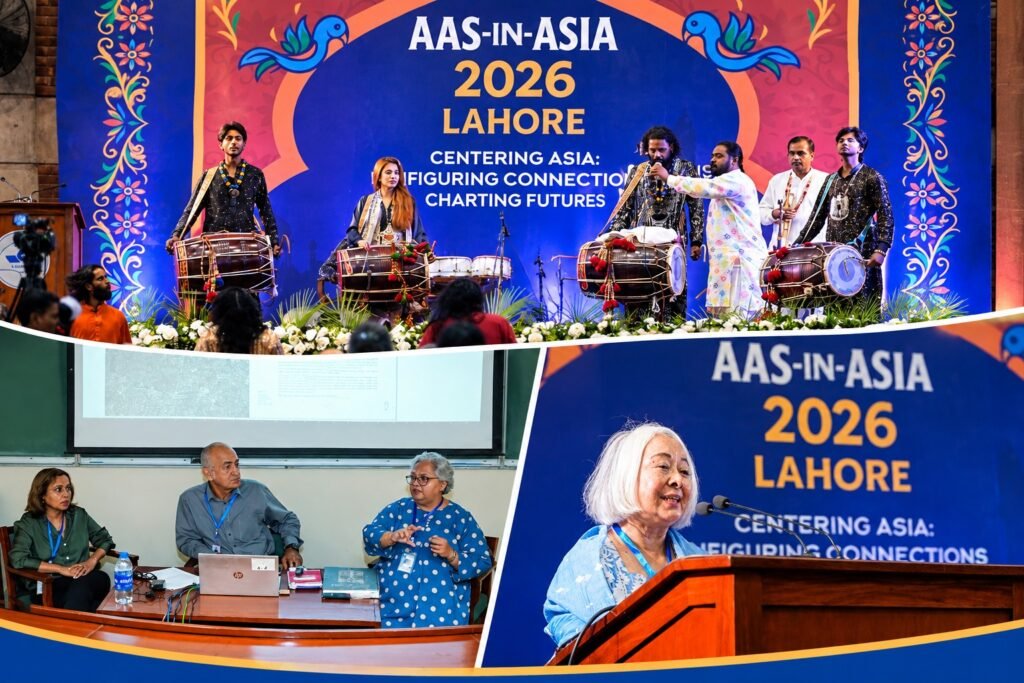
LAHORE: The three-day AAS-in-Asia 2026 conference concluded on Sunday at the Lahore University of Management Sciences (LUMS), bringing together more than 1,000 scholars, students, academics and university representatives from over 37 countries.
Held under the theme “Centering Asia: Refiguring Connections, Recharting Futures,” the international academic gathering featured participants from 517 institutions, including leading universities such as Peking University, Tsinghua University, the University of Tokyo, National University of Singapore, Nanyang Technological University, Harvard University, the University of Cambridge, the University of Oxford and Yale University.
The conference marked the first time AAS-in-Asia was hosted in Pakistan, following previous editions in South Korea, Indonesia, Nepal, Japan, India and Thailand.
The programme featured hundreds of panel discussions, workshops, roundtables, exhibitions, open houses and cultural activities across the LUMS campus. Scholars explored a broad range of subjects, including Asia’s political and economic transformation, conflict and cooperation, democratic change, artificial intelligence, technology and society, climate change, urban development, gender, inequality, cultural expression and new approaches to knowledge.
Discussions also examined border disputes, contested sovereignties, civic spaces, displacement, climate disruption and social justice, while highlighting the role of literature, art, heritage, performance and everyday cultural practices in shaping Asian identities.
During the opening ceremony, LUMS Vice Chancellor Dr. Ali Cheema welcomed delegates and highlighted the importance of Pakistan’s participation in broader academic discussions on Asia and the world.
He said hosting AAS-in-Asia provided LUMS and Pakistan with an opportunity to connect international scholars with the country’s academic and cultural landscape, while also showcasing Lahore’s longstanding role as a centre of literature, art and intellectual exchange.
Association for Asian Studies President Prof. Elora Shehabuddin said the conference had attracted around 1,500 registrations, with more than 900 participants attending in person. She also acknowledged the efforts of LUMS faculty, staff, students, volunteers, committees, sponsors and partner organisations.
The keynote address was delivered by Dr. Adil Najam, who focused on climate change and its growing implications beyond the environmental sphere. Drawing on experiences from Asia and South Asia, including Pakistan, he discussed what he termed the “Age of Adaptation” and examined the impact of climate change on water, food, security, development, governance and social justice.
The conference also provided opportunities for early-career researchers, students and academics from different disciplines to establish professional and research collaborations.
Cultural activities formed an important part of the gathering. A special calligraphy workshop, “The Contemplative Arts: A Studio Series,” introduced participants to regional artistic traditions, while exhibitions, performances and a cultural village highlighted Lahore’s heritage, crafts, cuisine, music and creative traditions.
The closing ceremony featured a South Asian dance programme combining Bhangra, Gidda, Kathak and Sufi devotional folk traditions, offering participants a cultural journey through the region’s diverse artistic heritage.
The conference concluded with an extensive exchange of academic research, ideas and cultural perspectives, bringing scholars and participants from Pakistan and around the world together in Lahore for discussions on Asi a’s changing present and future.